
Dick's Sporting Goods Stands by Foot Locker: Long-Term Confidence Amid Losses and Pessimistic Outlook
Dick's Sporting Goods defended its Foot Locker business during Tuesday's earnings call, despite the latter's second-quarter same-store sales falling 3.6%, with the full-year outlook turning to flat or down 2%, and an expected operating loss of $40 million to $80 million. Executives attributed this to fewer sneaker releases, shifting consumer tastes, and a promotional environment in overseas markets, but analysts questioned the acquisition decision, suggesting acknowledging the mistake and divesting the business.
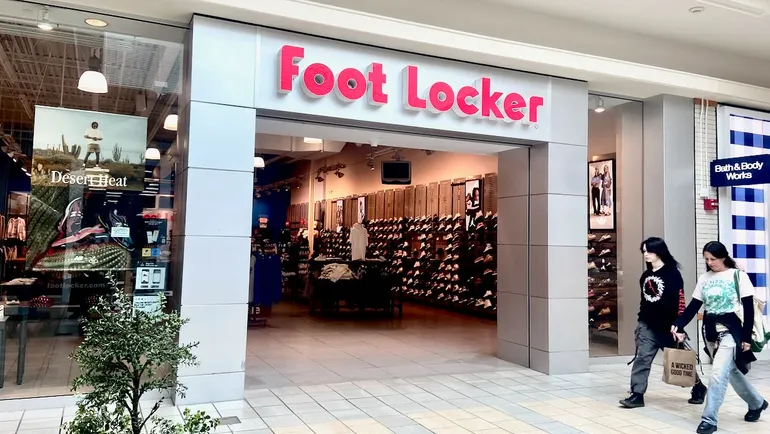
Key Takeaways:
- Despite sharply cutting its full-year outlook for the Foot Locker business, Dick's Sporting Goods executives defended the mall-based chain it acquired a year ago on Tuesday.
- A dearth of new sneaker launches, shifting consumer aesthetics in athletic footwear, and overseas market conditions collectively led to inventory buildup and a highly promotional environment in the second quarter, causing Foot Locker's comparable sales to decline 3.6% year-over-year.
- The company now expects Foot Locker comparable sales to be flat or decline up to 2%, compared with prior guidance of growth of 1.5% to 3%; operating loss is expected to be between $40 million and $80 million, versus prior expectations of a profit of $110 million to $150 million.
Deep Dive:
Dick's Sporting Goods Executive Chairman Ed Stack said on Tuesday's analyst call that the current promotional environment for athletic footwear, particularly lifestyle sneakers, is extremely intense and will persist through the end of the year.
Dick's own comparable sales also missed expectations but still grew nearly 5%, which the company's press release attributed to "broad-based growth across categories, including strong performance related to the 2026 FIFA World Cup, as well as increases in average ticket and transactions."
"We're going through this adjustment period where new silhouettes from Nike, Adidas, and also brands like On and Hoka are replacing those iconic styles," Stack said.
Executives noted that running and performance footwear are performing well, but lifestyle footwear is struggling as consumers move away from some classic sneaker silhouettes toward other types of footwear.
"I do think there is a shift toward the 'brown shoe' category, like UGG and Birkenstock, and we continue to participate in that," Stack said. "Those businesses are very hot for us and growing significantly. We're also looking at bringing in several other brands that will help provide a buffer while the athletic business goes through this transition."
He said Dick's will benefit the most from these shifts, but margin pressure will still exist, especially in the third quarter.
CFO Navdeep Gupta said Dick's full-year operating margin outlook has been lowered to 10.6% to 10.9% from a previous range of 11% to 11.4%, with gross margin expected to decline slightly. This reflects not only a more promotional market environment but also higher fuel prices and increased supply chain costs.
This situation affects both Dick's and Foot Locker, but Dick's more diversified retail, category, and brand portfolio has protected its business to some extent. Executives admitted that Foot Locker's struggles in Europe caught them off guard.
"None of this changes our confidence in the long-term opportunity for Foot Locker," Stack said.
However, some analysts believe Foot Locker's second-quarter performance indicates the acquisition was unwise, and executives' comments also suggest they did not fully understand the business they were buying.
"Unfortunately, the best path may be to admit the mistake now and divest the chain entirely," Quo Vadis Capital President and Founder John Zolidis said in a Tuesday research note, warning that Dick's may need to divert capital to revitalize Foot Locker and stem operating losses.
Indeed, Stack told analysts that Foot Locker's turnaround is still in its early stages.
"Shareholders are now saddled with a chain that has structural issues, including storefront complexity with overlapping banners in multiple markets, over-reliance on a single struggling supplier, aging mall properties, and exposure to lower-income consumer demographics," Zolidis said.