
Walmart Bets on Boho Style with New Private Brand Scenario
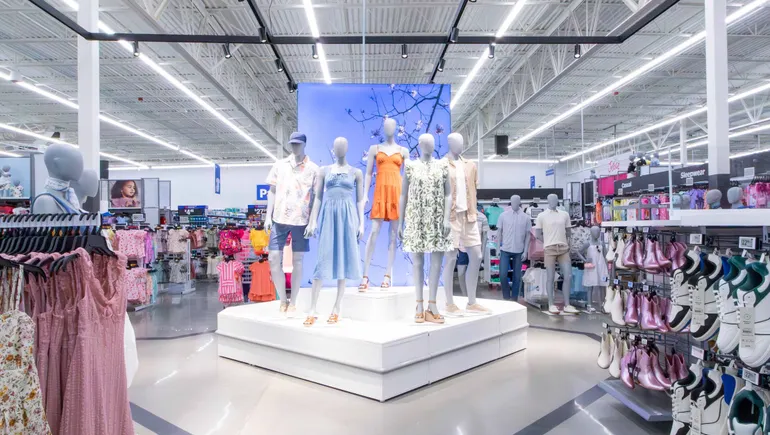
Walmart announced the launch of its new private brand Scenario, positioned as 'modern bohemian style,' available across all stores, spanning five categories: apparel, footwear, jewelry, handbags, and accessories, totaling 280 items, with most priced under $25. This move stems from consumer research showing nearly one in five women list bohemian as their favorite style, and existing brands failed to cover this demand. Previously, Walmart had tested boho styles under its private brand Time and Tru, receiving positive feedback, leading to the creation of this new standalone brand.
Key Takeaways
- Walmart announced in an email to Retail Dive that it is launching a new private brand, Scenario, positioned as a "modern bohemian brand."
- Scenario will be available in all Walmart stores, covering five departments: apparel, footwear, jewelry, handbags, and accessories, with a total of 280 style items.
- Most items in the Scenario collection are priced below $25.
Deep Dive
Walmart is once again expanding its private apparel brand portfolio. The company said it needed a new private brand to reflect consumers' evolving styles and believes the modern bohemian aesthetic can meet that need.
"Consumer research shows that nearly one in five women lists bohemian as one of their favorite styles, and none of our existing private brands is perceived to serve that aesthetic," Walmart said in a statement.
Walmart previously tested bohemian styles under another private brand, Time and Tru (which generates $2 billion in annual sales), to gauge consumer interest. The results were positive, directly leading to the creation of the new brand Scenario. Scenario emphasizes feminine details and is designed with easy-to-mix-and-match pieces.
Walmart has been continuously adjusting and upgrading its fashion strategy in recent years. In 2019, the retailer launched Scoop, a private brand focused on trend-forward styles. Two years later, it announced that fashion designer Brandon Maxwell would serve as creative director for that brand and another private brand, Free Assembly.
According to company data, consumers of Scoop and Free Assembly spend nearly twice as much per order as Walmart's average fashion customer.
"We're seeing strong performance in fashion," said David Guggina, president and CEO of Walmart U.S., during a recent second-quarter earnings call with analysts. "On the fashion side, I'm very excited about some of our private brands like Scoop and Free Assembly, which are achieving triple-digit comparable sales growth."
In the second quarter, Walmart's overall revenue grew nearly 6% year over year to $188 billion. U.S. transactions and average ticket both grew approximately 1% year over year, while e-commerce sales increased 24%.