
Revlon's Next Chapter: Brand Struggles and Turnaround Opportunities in Bankruptcy Restructuring
Revlon filed for Chapter 11 bankruptcy protection this summer with over $3 billion in debt, facing over $100 million in sales losses due to inventory shortages. Despite its long history and well-known brands, the pandemic, supply chain issues, and intensified competition have left it in trouble. Experts believe Revlon's brand value remains attractive, but it needs to make adjustments in technology, innovation, and strategy.
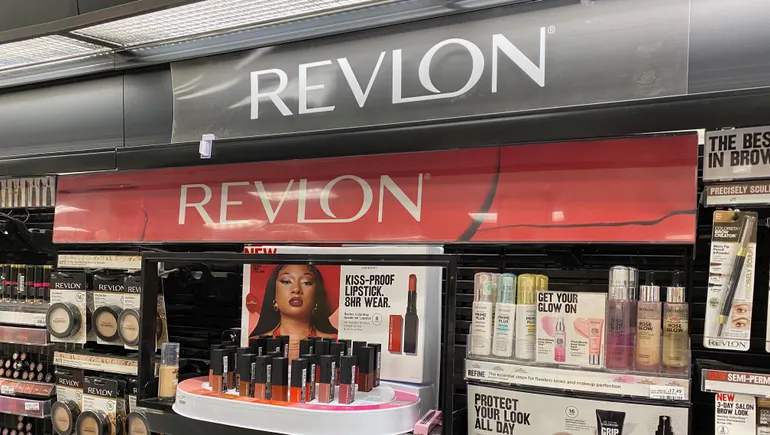
Revlon's future is up in the air.The iconic brand filed for Chapter 11 bankruptcy protection this summer saddled with more than $3 billion in debt, struggling with supplier issues, and facing over $100 million in lost sales due to insufficient inventory.
That's a far cry from its origin story. In 1932, brothers Charles and Joseph Revson founded Revlon with chemist Charles Lachman, launching a nail polish product. The product was first introduced in salons and then expanded to stores. Within a decade, Revlon became a multi-million dollar company, and by the end of World War II, it was recognized as one of the top five beauty brands in America. For 90 years, Revlon has been in the public eye, with its products available in stores worldwide.
Recently, however, the company has been struggling. Even before the pandemic, cracks were showing in its foundation, with sales stagnating and competition intensifying. These challenges became more severe when COVID-19 spread and changed the world—including how people shopped. During the pandemic, consumers stayed home, wore masks, and reduced beauty spending. Subsequently, supply chain issues began to emerge for most retailers, as the pandemic revealed weaknesses in geography, capacity, and scale.
Now, Revlon faces a changing retail landscape. Can this iconic company find a way forward?
Inventory and Timing Issues
Revlon produces a vast number of products. The company creates and sells over 8,000 stock keeping units (SKUs), including lipsticks, eyeshadows, and fragrances. Additionally, many of these products require up to 40 different raw materials to manufacture. Revlon does not keep large inventories, so when it cannot source one ingredient, it halts production of all related SKUs. This year, due to insufficient inventory, several of its manufacturing plants had to temporarily halt production or shut down.
Furthermore, heading into the holiday season, Revlon expects to lose at least $87 million in holiday sales due to its inability to meet customer demand.
"If Revlon had filed for bankruptcy three years ago or two years ago, it would have had more options." — Jim Van Horn, Partner at Barnes & Thornburg
Of course, Revlon is not the only company to have faced supply chain difficulties in the past few years. The pandemic brought chaos to operations, forcing brands and retailers to scramble to adjust and adapt. In 2019, when holding company MacAndrews & Forbes—Revlon's largest shareholder—considered a sale, the company was already burdened with billions of dollars in debt. Sales declined, net losses widened, and executive turnover was frequent.
This raises the question—should Revlon have filed for bankruptcy earlier? Or pushed forward with a sale? These actions might have placed the company in a stronger position than it is today.
"If Revlon had filed for bankruptcy three years ago or two years ago, it would have had more options," Jim Van Horn, partner and bankruptcy attorney at Barnes & Thornburg, said in an interview. "But I also completely understand why they didn't." That's because a successful restructuring could avoid bankruptcy. "Many companies go through difficult times, and they eventually work their way out because they know what they're doing, manage the plan, and execute it," Van Horn said.
Revlon is entering a different environment than before the pandemic. The ongoing effects of supply chain disruptions, inventory problems, inflation, and interest rates all create unfavorable conditions for bankrupt companies as they formulate their next steps. "This has caused M&A activity to nearly stall because there are valuation issues," Van Horn said. The challenging macroeconomic environment may also limit retailers' ability to sell parts of their asset portfolios or strike new joint venture deals—"things retail companies often do," he said.
But the problem is not unique to retail. Inflationary pressures and high interest rates are forcing companies to borrow or refinance at higher rates. "When interest rates were nearly zero, the burden was already difficult; now it's incredibly hard to bear. This will lead to a significant rise in default rates." Van Horn said: "Someone told me long ago that no debtor files for bankruptcy too early. It's always too late."
Has Revlon Become a Consumer Packaged Goods Company?
Revlon hasn't always been on the edge. The company, with over 15 brands sold in more than 150 countries, was once an industry leader. Its first "Fire and Ice" campaign in 1952 was done in collaboration with Vogue and featured celebrity endorsements. It was also widely seen as the first advertisement centered on the female experience rather than on men, suggesting that lipstick could be worn for a woman's own pleasure.
The company continued to convey messages of empowerment and aspiration, launching era-defining products such as the hugely successful fragrance Charlie. The Charlie ads, featuring model Shelley Hack in pantsuits, evoked a sense of female independence and liberation, distinctly different from other fragrance ads of the time. In the 1980s, the company launched the "Most Unforgettable Women in the World" campaign, featuring high-profile models like Iman, Claudia Schiffer, Cindy Crawford, and Christy Turlington.
Robin Albin, founder of brand management and strategy firm Insurgents, worked with Revlon at the time of Charlie's launch. "They were strong advocates for strong, powerful women," she said in an interview. "It's always been sad to me that they gave that up." Albin said the company began to center on product features rather than moving forward as an aspirational brand. "The aspiration disappeared, and it became packaged goods... consumer packaged goods," Albin said, pointing to the types of stores where Revlon was sold. "Revlon used to be in department stores. When it left there, it was just hanging on drugstore shelves. That was also the moment it lost its luster."
Over the decades, Revlon faced increasing competition for physical store space and market share. Competition came not only from the drugstore channel but also from department stores, mass merchandisers, wholesalers, big-box retailers, and one-stop shops like Sephora and Ulta. More recently, direct-to-consumer brands have become formidable rivals, particularly capturing the attention and money of younger generations. And Revlon failed to keep up, analysts said.
"Revlon has been gradually losing market share in the U.S. since 2018, but the pandemic dealt the company another blow on top of existing financial challenges," Lia Neophytou, senior consumer analyst at GlobalData, said in a June report on the company. According to GlobalData data, Revlon's value share in the U.S. cosmetics and toiletries industry fell from 2.6% in 2018 to 2.1% last year.
While Revlon may not have underestimated the power of its DTC competitors, it may have struggled to compete. "It is increasingly difficult for large, established, multinational brands to compete with smaller, independent DTC brands, which often build brand loyalty through real-time, authentic brand development online," Neophytou said in comments to Retail Dive.
Albin said the company faces the difficult but not insurmountable challenge of rebuilding its connection with its audience. "I don't think most people today associate beauty with Revlon," Albin said. "It's been off the radar for so long... there's another brand every five minutes. So, it's kind of like they've been pushed down in mind share."
Missed Opportunities?
Despite Revlon's financial difficulties, it has had some key product moments in recent years, most notably the hugely successful One-Step Hair Dryer and Volumizer Hot Air Brush. The product currently has nearly 260,000 five-star reviews on Amazon and retails for about $40, allowing users to achieve salon-quality blowout results. The product went viral on social media, especially on TikTok, and spawned numerous YouTube tutorial videos, some of which garnered millions of views.
While the viral success of a popular product might seem enough to revitalize a brand, it's not a direct way to build momentum. "The problem with many companies is that you don't sustain and build on what you've done," Albin said. "It's like, 'Okay, next, move on to the next.'" Revlon's financial challenges may have hindered its ability to invest in advertising and technology aligned with changing consumer behavior, Neophytou said.
"Revlon is active on social media, but it could have leveraged emerging platforms more intensively to drive sales, as it faces increasing competition from online-first beauty brands backed by celebrities and influencers, such as Fenty Beauty, which has a large and highly engaged social media following," Neophytou said. "However, its financial challenges should not be underestimated, and social media investment may not be enough to fully offset these."
While other beauty brands invested in technologies like virtual try-ons, Revlon did not invest heavily. Adding AR options became particularly useful during the peak of the pandemic for high-touch industries. Furthermore, GlobalData found Revlon to be a "traditional laggard" in innovation leadership, while other companies invested in disruptive themes such as blockchain, robotics, augmented reality, and virtual reality.
Falling behind in technology may ultimately cost Revlon in its bankruptcy options. "If an interested buyer takes over Revlon, it is crucial to invest in technology, R&D, and actively pursue deals to pose a greater challenge to competitors like L'Oréal," Apoorva Bajaj, practice head at GlobalData, wrote in a September report.
Valuable IP
Since filing for Chapter 11 bankruptcy, Revlon has reached agreements with hundreds of suppliers to help restart its supply chain. According to court documents, its trade credit and liquidity position has also "improved significantly." The company has also received court permission to pay bonuses to key employees, including executives.
Meanwhile, the New York Stock Exchange has suspended trading of the company's Class A common stock. The NYSE expects to complete the delisting in the "near future."
"The Chapter 11 filing does not necessarily mark the end of Revlon; another conglomerate may recognize its full potential and make a bid to acquire it," Neophytou said, reiterating that the company still has a vast portfolio of products, "brands that are still deeply loved by their audiences." "Alternatively, Revlon's largest and fastest-growing brands could also become acquisition targets rather than a full takeover of the entire portfolio," she said.
Revlon's name is still widely known, Van Horn said, and that translates into value. Revlon is "almost the definition of an iconic brand," he said. "I don't know what's more iconic than Elizabeth Arden... almost everyone knows Revlon, and they not only know Revlon, they know the iconic brands under Revlon." And that translates into value. "They're going to have a lot of options, and they certainly have many options to investigate and pursue," Van Horn said.
