
How Small Retailers Survive and Break Through in the Holiday Shopping Season
The supply chain disruptions, shifting consumption habits, and inflationary pressures triggered by the pandemic continue to impact the retail industry. Although small retailers feel the impact earlier, they are also finding ways to break through through flexible procurement, spatial advantages, and personalized services. This article, from the perspective of Leah Daniels, owner of Hill's Kitchen, a kitchenware store in Washington, D.C., analyzes the coping strategies and industry prospects of small businesses during the holiday season.
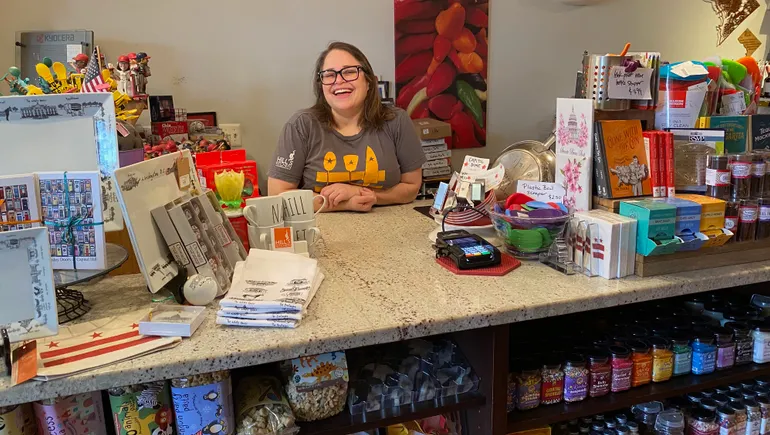
Like most retailers, Leah Daniels is in the midst of an unpredictable holiday shopping season.
Daniels runs Hill's Kitchen, a cookware store in the Capitol Hill neighborhood of Washington, D.C. Over the past few years, her small business has followed a similar trajectory to larger retailers, including dealing with supply chain uncertainty from the pandemic, operational changes at the store level, and a customer base that has repeatedly changed its spending habits.
"I would say retail is exhausting right now," Daniels said. "I think people in retail are working a lot harder than they did before the pandemic."
The global public health crisis has transformed retail — regardless of size — in ways that are still unfolding. The year 2020 was characterized by fickle consumer demand. By 2021, demand had picked up, but supply chains were disrupted, with raw material shortages, tight shipping capacity, and facility closures as friction points. This year, inflation has become the top concern, with consumers cutting back on spending and seeking discounts to make their money go further.
Small businesses have not been immune to these disruptions, and may have felt them even earlier than big companies.
"Generally speaking, if big retailers are having a problem, small retailers often had the same problem earlier," Sparkplug CEO Andrew Duffy said in an email comment.
However, consumers do seem to be favoring local merchants this holiday shopping season. According to a recent study by Intuit QuickBooks, consumers plan to spend 40% of their total holiday budget at small businesses, representing an $88 billion opportunity.
Small Business Saturday brought in nearly $18 billion in sales this November, and 72% of shoppers said they would continue to buy from local merchants during the holidays because of their impact on the local community.
As the industry enters the final weeks of the holiday season, time is increasingly tight, and retailers of all sizes are working hard to boost sales in this most important quarter. The 2022 holiday season seems to still be overshadowed by the early days of the pandemic.
What happened after people started cooking
In the early days of the pandemic, homebound consumers turned to cooking. With restaurant dining rooms closed and grocery stores out of stock, people cooked for themselves out of necessity and for entertainment.
Home retailers boomed, including cookware stores trying to keep up with a population suddenly obsessed with baking bread.

This changed Daniels' approach to purchasing. "People started cooking a lot. And my suppliers didn't necessarily have enough inventory to handle the sudden influx of orders for baking pans, Dutch ovens, and saucepans." To adapt, Daniels adjusted her ordering approach. When suppliers had stock, she placed larger orders than usual.
"My base inventory level has gone up over the past few years," she said, "because if I could get it, I would take it."
Additionally, many suppliers had a large amount of merchandise on backorder at the time.
"Fast forward to 2022, the supply chain has caught up. All the backorders arrived. But the interest has faded," Daniels said.
Daniels' inventory experience is also reflected among larger retailers. According to analysis by S&P Capital IQ and FTI Consulting, retail inventories rose 31% year over year by the second quarter of 2022. In the final months of the year, imports fell sharply as retailers tried to clear excess inventory.
Retailers also began offering discounts to clear stock, just as consumers started cutting back on discretionary spending. Heading into the holiday season, according to a recent ICSC survey, nearly 90% of consumers said inflation would impact their holiday spending.
Large retailers may be better positioned to handle these pressure points. "They have more flexibility to shift slow-moving inventory between stores in their network, discount it to attract bargain hunters, or simply write it off and absorb the loss from cash reserves," Duffy said. "Small retailers rarely have that level of purchasing leverage or flexibility, so they usually encounter these problems first and struggle against them more."
Supplier discounts and bulk buying
Although retailers are offering discounts to consumers this season, Daniels said suppliers have also adopted similar tactics this year to attract retailers to buy. Suppliers, burdened with excess inventory and limited warehouse space, are offering discounts to retailers — something Daniels hasn't seen in recent years.
Not only are they offering discounts, but they're also willing to negotiate on price. "I'm finally getting suppliers to work with me a little bit. The problem is, I don't have extra space either," Daniels said.
Daniels' store has two floors. The first floor is the retail sales area. The second floor has a kitchen that used to be a cooking class space and is now storing excess inventory.
"If suppliers keep offering me promotions, I'll buy in bulk to take advantage of them, because that's my profit margin," Daniels said. Despite rising costs such as shipping, she hasn't raised prices for customers because she wants to maintain certain price points in the store. "But now that companies are giving me deals, I can make up that profit."
Having the second-floor space has helped with this strategy. "I'm lucky to have great storage space in the store," she said. "The extra storage space helped me get through the deep pandemic period when I couldn't get inventory. When I could get it, I bought in bulk. I filled every inch of the kitchen space."
This may be a different situation for other small retailers this season. According to the QuickBooks survey, supply chain challenges were listed by small businesses as one of the top factors that could impact their holiday sales goals. 70% of respondents expected inventory shortages, and 90% experienced difficulties with shipping and fulfillment.
"The extra storage space helped me get through the deep pandemic period when I couldn't get inventory. When I could get it, I bought in bulk."

Leah Daniels
Owner and managing member of Hill's Kitchen
Additionally, many suppliers have also raised minimum order quantities, which can have a significant impact on small operations. "I used to order 12 pieces, now I order 24," Daniels cited as an example. "So I've made my inventory less low overall. I don't order as frequently. My orders have become bigger and fewer."
Daniels said ordering less frequently can be positive in some ways because it saves time. "Actually, ordering in bulk is easier because I don't have to think about it as often," she said.
"I look at the shelves now, and there's a lot of inventory for customers. I'm just waiting for customers to come in. And I do think you hear the same thing from suppliers," Daniels said.
Looking ahead
This holiday season matters a lot. "For most consumer-facing small businesses, the holiday season is a make-or-break time every year," Duffy said. "Some companies generate up to 75% of their annual revenue in the fourth quarter, which means any underperformance can lead to significant cash flow problems entering the slower first-quarter buying season of the following year."
ActiveCampaign Chief Customer Officer Dutta Satadip called this "critical" for many businesses. "Every holiday season is crucial for winning consumer loyalty, but the past two holiday seasons have been challenging due to the pandemic and ongoing supply chain issues, which have made building customer trust very difficult," Satadip wrote in an email comment.
However, there are signs of marginal improvement. According to a recent report from Wells Fargo, small business optimism improved in November.
"Large retailers can learn from small businesses and the exceptional experiences they provide to their customers."
Dutta Satadip
Chief Customer Officer at ActiveCampaign
Inflation remains the top concern for small businesses, with 32% of owners reporting it as their most pressing issue. But there are signs that pressure is easing. The National Federation of Independent Business Small Business Optimism Index rose to 91.9 in November, up from 91.3 the previous month, reflecting "easing inflation pressures and a slightly less pessimistic economic outlook," according to Wells Fargo.
However, small businesses have some advantages that larger retailers don't, as they are "better able to mitigate excess inventory because of the personalized experiences they offer customers," Satadip said. Additionally, according to a December survey from ActiveCampaign, only 12% of consumers said big-box stores exceeded their expectations for customer experience.
"Small businesses have a great opportunity to provide more personalized experiences and win loyalty in the final weeks of the holiday season and into the new year," Satadip said. "Large retailers can learn from small businesses and the exceptional experiences they provide to their customers."
Daniels is exactly the kind of person providing that personal touch. Her store was open on Thanksgiving Day, as it has been in past years, so neighbors could stop by for supplies and she could help customers with their last-minute cooking dilemmas.
"It's a long day, but it's usually a day full of grateful people," Daniels said.