
Why Some Shippers Still Aren't Diverting Package Volume Amid UPS Strike Threat
The contract between UPS and the Teamsters union is set to expire on July 31, and if no agreement is reached, a strike could occur on August 1. However, many shippers have not diverted their package volumes, citing reasons including confidence in successful negotiations, volume discounts and penalty clauses in contracts, and the complexity of testing new carriers. Meanwhile, some companies have developed contingency plans, such as adding backup carriers or utilizing regional logistics services.
Editor's Note: UPS and the International Brotherhood of Teamsters announced Tuesday that they have reached a tentative agreement on a new five-year national contract. According to the Teamsters' announcement, the agreement "raises wages for all workers, creates more full-time jobs, and includes dozens of workplace protections and improvements."See the detailed report from sister publication Supply Chain Dive。
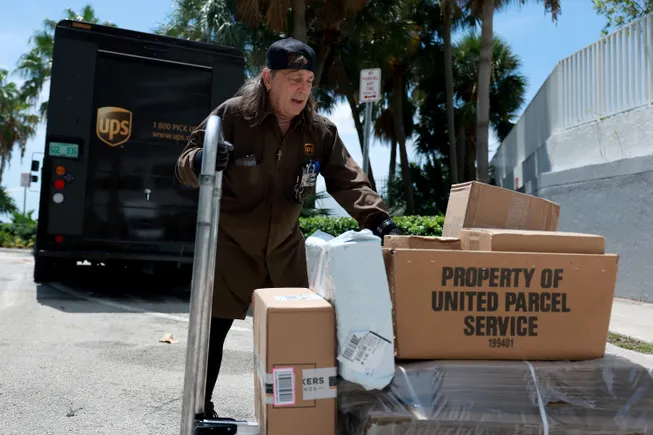
The looming threat of a UPS strike has not prompted many companies to shift some of their package volume to other carriers.
The delivery giant's national contract agreement, covering approximately 330,000 UPS employees, expires at the end of this month. The union plans to strike on August 1 unless a tentative agreement is reached on a new contract, which would paralyze the company's network and cause supply chain disruptions.
But according to parcel delivery experts, even in the face of this risk, andthe growing popularity of carrier diversification, some shippers still maintain their current volume levels with UPS. Company size, existing carrier mix, confidence in reaching a negotiated agreement, and the nuances of their specific transportation contracts all play a role in this decision.
This does not mean that all shippers are indifferent to the strike threat. As the contract expiration date approaches, there are still companies scrambling to implement alternative carrier plans.
"The tone I've seen over the past month or so has changed," Stephen Beard, vice president of transportation at e-commerce fulfillment provider PFS, told sister publication Supply Chain Dive. "Now, all my customers want to discuss with me how to shift volume away from UPS."
Here's why some UPS shippers are staying steady, while others are ramping up mitigation plans.
The benefits of sticking with UPS
Third-party logistics company AFS Logistics has not yet seen a significant shift in its customers' volume away from UPS. Micheal McDonagh, president of parcel services at AFS Logistics, said there are multiple reasons behind this.
Some shippers simply believe that the company and the Teamsters will reach an agreement before a strike occurs. Large customers may also be concerned about losing volume-based shipping discounts—even shifting for just a week or two could result in significant discount losses—as well as the complexity involved in adjusting their carrier mix.
"You're talking about testing systems, testing routes, testing pickup times, and training employees for changes that may not happen," McDonagh said.
Additionally, strict contract terms may deter shippers from moving packages to other carriers.
PFS's Beard has seen some shippers locked into contracts that face hefty penalties if they fail to provide the carrier with agreed-upon annual volume. Such arrangements have become more common after capacity constraints during the COVID-19 pandemic, when delivery demand was high.
"For three years, it was like, 'Whatever the price, just pick up my goods,'" Beard said. "During that time, carriers took advantage of that leverage. They were able to insert clauses into contracts that had never been there before, and I think that's creating this current stickiness."

Experts say small and medium-sized businesses are particularly vulnerable to strike-related disruptions because they lack the volume or purchasing power to easily secure capacity from alternative carriers. Many businesses still rely on a single source with national carriers like UPS.
UPS has also worked to retain business as delivery demand cools,assigning executives to its major customers, to convince them to continue using its network. The company's strategy appears to be working, as competitor FedExdid not gain substantial benefits from the contract negotiations in the most recent quarter。
These factors have led to a range of companies facing risk if UPS strikes.
Williams-Sonoma and headphone company Koss Corporation have listed unresolved contract negotiations as operational risks in their securities filings this year. Nicokick, a seller of smokeless nicotine products that uses multiple UPS shipping services,warns on its websitethat customers should consider placing orders as soon as possible to avoid potential delays.
"Orders shipped before July 31 are likely to be unaffected," Nicokick said.
Other shippers develop contingency plans
Other companies have laid the groundwork to mitigate the impact of a UPS strike.
In emails to Supply Chain Dive, UPS's major customer Amazon (which hasexpanded its own delivery fleet) and Macy's expressed confidence in minimizing any disruption caused by a strike.
"At Macy's, our experienced team has successfully navigated supply chain disruptions in the past and is confident in its ability to adapt flexibly as needed," a spokesperson for the retailer said. "If a strike occurs, we have contingency plans in place to mitigate any impact on our customers."
Experts say a key component of contingency plans issecuring capacity with alternative carriers. Since capacity constraints in 2020 and 2021, shippers have diversified their carrier mix beyond just UPS and others.
Shippers have added more delivery options in recent years
For example, AxleHire has seen existing customers shift volume originally destined for UPS to this urban last-mile delivery provider to mitigate potential disruptions, said Chief Operating Officer Adam Bryant. The company expects no additional volume shifts from these customers and plans to use its gig-worker network to serve new customers on a first-come, first-served basis.
"One of our advantages is that we are a very asset-light model," Bryant said. "By leveraging the gig economy and these partners, we are able to scale flexibly."
Leveraging a diversified mix of delivery companies is a key part of PFS's plan to mitigate the impact of a strike on its clients, many of which ship lightweight products such as luxury goods and cosmetics, Beard said.
For items weighing more than four pounds, the fulfillment provider will rely on FedEx. Products below that threshold are typically handled by workshare partners of the United States Postal Service (USPS). These partners (such as OSM) inject volume into the postal network closer to delivery destinations, bypassing potential bottlenecks at large postal sorting facilities.
"This is more flexible than the integrated carriers' networks," Beard said.