
Golf Fashion Steps into the Mainstream: A Cultural Shift from the Course to Everyday Wear
Golf is undergoing a cultural renaissance: participation surpassed 40 million for the first time in 2022 and has continued to grow, with 2024 reports showing that Asian, Black, and Hispanic golfers account for 23% of players. Younger participants (ages 6 to 34, nearly half) are driving apparel brands to blend performance with street style. From Under Armour's functional designs to Eastside Golf's collaboration with Jordan, and Tiger Woods' Sun Day Red, golf fashion is breaking beyond the course to become part of the mainstream lifestyle.
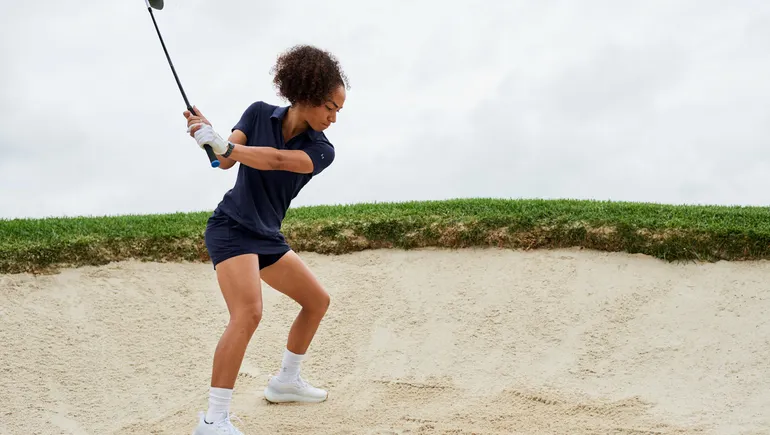
Golf is having its moment in the spotlight. As younger, more diverse groups embrace the sport as a lifestyle, golf may have found its fashion audience through a pandemic-driven cultural shift that impacted most people.
According to a February report by the National Golf Foundation, after total golf participation surpassed 40 million for the first time in 2022, active participants on and off the course have now grown to about 45 million Americans. The 2024 report also showed that Asian, Black, and Hispanic golfers reached a record high, accounting for 23% of the total, or more than 6 million people.
The sport's interest group is also trending younger. The PGA Tour reported last year that nearly half of golf participants are between the ages of 6 and 34. The NGF report also found that women accounted for 26% of all U.S. golfers in 2023.
Golf as a lifestyle
Golf apparel brands say they see a crossover appeal between customers who play the sport and those who simply like the style, which could signal golf's growing popularity as a mainstream lifestyle. Demographic shifts are prompting independent brands as well as established players like Nike, Adidas, and Under Armour to launch more functional fashion items.

"The key to making golf fashion 'mainstream cool' lies in balancing performance with style," Jocelyn Santiago, director of golf apparel at Under Armour, wrote in an email to sister publication Fashion Dive. "Today we see more and more brands incorporating lifestyle-driven golf apparel elements, emphasizing fashion-forward designs while maintaining functionality. If brands can do that and adapt to the evolving dress codes on the course, we will continue to see broader audiences embrace the style—whether or not they have a tee time booked that day."
According to the NGF, golf participation was already slowly growing before the pandemic, but it was during the two to three years of staying home that a new wave of enthusiasts flocked to golf courses and outdoor recreation venues.
"Off-course participation and social media have played a key role in golf's popularity and cool factor, as celebrities, athletes, and content creators with large followings are elevating golf's positive image, especially among non-golfers," the NGF said in its 2024 report.
Matt Daniels, co-founder of apparel brand Blackballed Golf, said the COVID-19 pandemic gave rise to a "new wave" in the sport.

"When we started the company, fashion was just beginning to gain attention in golf, and that's what attracted many of our customers," Daniels said. "There are Black people who play golf, and people of other races. Our main goal is to provide a path for young people to grow in the sport, grow as individuals, and express themselves in whatever way they see fit."
Golf's 'aha' moment
Menswear writer Derek Guy, author of Die Workwear, believes that a particular style or item often needs an unpredictable cultural moment to become iconic.
Guy cites the Adidas Samba—first introduced in 1951—which transcended soccer itself to become a cool lifestyle item worn by numerous celebrities and fashion consumers.
"People wearing these shoes today don't always want to say 'I play soccer,'" Guy said. "They might be paying homage to breakdancers they've seen, or echoing a certain street style. It represents far more than soccer—it's about the cultural groups that give the item its own meaning."
Guy said the "aha" moment for any trend can come from someone with significant cultural capital introducing an idea or aesthetic that already exists, and then suddenly, that thing takes off.
"That's entirely possible for golf items," Guy said. "But it's not something the sport itself can curate. However, when you view clothing as a sociological language, it's absolutely achievable for golf."
Finding new audiences
Many golf fashion brands that weave golf into their brand narratives are promoting the sport—and ultimately their own brands—by reaching people who may not have initially seen the sport as for them.
"At the end of the day, our logo is me," said Olajuwon Ajanaku, co-founder of Atlanta-based golf apparel brand Eastside Golf, which is driven by diversity and youth engagement. "If you look at the logo, it's a Black man in jeans, a sweatshirt, and a Cuban link chain, swinging in one direction while the chain swings the other way. He's saying in real life: I just want to be myself because I love this sport."
Ajanaku and co-founder Earl Cooper played golf at Morehouse College and won the PGA Minority Collegiate Golf Championship with their team in 2010. Eastside Golf was founded to support Ajanaku's dream of turning pro. A decade later, the brand has become an independent golf-inspired fashion label, collaborating with Jordan Brand on footwear and, according to the founders, becoming a wardrobe favorite of NBA star Steph Curry and former President Barack Obama.

The brand's "1961" shoe with Jordan was designed to commemorate the year the PGA abolished its "Caucasian-only" clause and to honor Black golfers like Lee Elder and Charlie Sifford.
"It's about shining a light on their careers," Ajanaku said. "There's history in this sport."
Collaborations with golf-inspired brands have become more common, further fueling interest on the fashion runway.
Musician Tyler, the Creator has collaborated with Louis Vuitton, Converse, and Lacoste, and owns streetwear brands Golf Wang and Golf Le Fleur. Other brands spanning golf and street style include Bogey Boys—a Seattle-based label founded by musician Macklemore that blends nostalgia with modern silhouettes and vibrant colors—and Metalwood, a California company that calls itself a "rebellious, vintage-inspired golf brand."

Malbon Golf, founded by Stephen Malbon and Erica Malbon in 2017, has grown into a laid-back Los Angeles golf brand catering to both serious players and fashion-forward customers. The company is known for numerous capsule collaborations with brands such as Nike, Adidas, Vilebrequin, Kanata Knits, and most recently Tag Heuer.
Golfer Tiger Woods has also had a cultural and fashion impact on the sport. After reportedly earning about $500 million over his 27-year partnership with Nike, Woods announced in February a new partnership with Taylor Made to launch the upcoming golf-inspired apparel brand Sun Day Red.

Entertainment golf venues like Topgolf, Drive Shack, and Popstroke have also played a role in positioning the sport as accessible to the masses, opening up the concept of golf to audiences who have never set foot on a real course. Topgolf recently launched a marketing campaign targeting people from a wide range of backgrounds to convey the idea that "playing golf with friends is a great activity they can enjoy and relate to," according to the company. The campaign, called "Come Play Around," includes a 60-second commercial featuring participants from all walks of life.
"We are making golf more inclusive and open to everyone," Topgolf Chief Brand Officer Geoff Cottrill said in a statement. "This campaign celebrates different people and personalities from around the world coming together to enjoy a little golf."
Daniels shares a similar mindset. He said he founded Blackballed Golf to help open up the sport he loves to a more diverse pool of potential players.
"Look at how the sport has been. It has a way of pushing away people who might not fit the stereotype. And that's easily based on what you wear, how you look," Daniels said. "So, for us, Blackballed Golf was founded on a simple premise: to revolutionize golf apparel by infusing style, quality, and a genuine commitment to diversity and inclusion."