
Store technology upgrades should not come at the cost of layoffs
In recent years, due to factors such as operational adjustments, recruitment difficulties, and cost reduction, the number of employees in some retail stores has significantly decreased. However, experts warn that excessive workforce reduction may harm customer experience and employee morale, ultimately affecting sales. Although technology applications can improve efficiency, they cannot fully replace manual services. A reasonable balance between technology and human investment is the right path for the sustainable development of the retail industry.
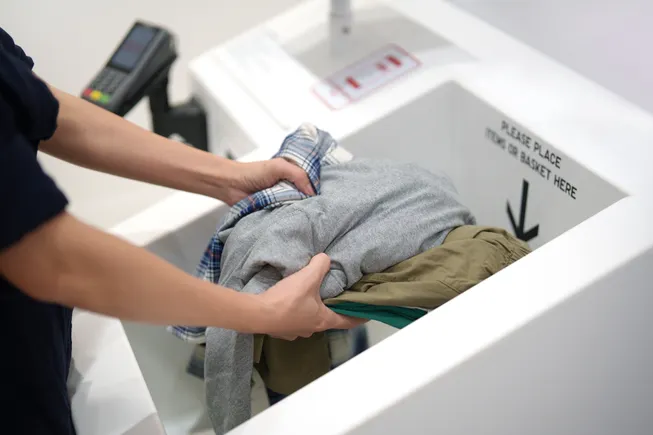
In recent years, due to multiple factors such as operational model adjustments, recruitment challenges, and corporate cost-cutting, staffing levels at some retail stores have noticeably decreased. Since the peak of the pandemic, store operations have become increasingly complex, with omnichannel services such as online fulfillment, buy-online-pick-up-in-store, and delivery deeply integrated into daily routines. Meanwhile, recruitment has become more difficult in many regions, with wages rising and unemployment falling. Some retailers, under pressure on profits and gross margins, have cut expenses, including reducing staff and often replacing labor with technology.
"Many stores are operating with leaner staffing than in the past, with overall reductions in both headcount and hours," Neil Saunders, Managing Director of GlobalData, said via email. "Macy's is a prime example, with current staffing levels per store down about 18% compared to 2019."
Macy's is not alone in reducing its workforce. According to data from the U.S. Bureau of Labor Statistics, overall retail employment has declined and is expected to decrease further: as of March, the retail unemployment rate was 5.1%, compared to the overall unemployment rate of 3.8%. Over the next decade or so, the industry is projected to lose nearly 77,000 jobs, a decline of 2%, while the average growth expected across all industries is 3%.
However, experts warn that running stores with lean staffing is often a mistake, and many retailers should increase their workforce, even as they actively adopt new technologies to handle tasks previously done by humans. For example, a survey by Theatro, a company providing communication technology for frontline workers, showed that over 40% of respondents said shopping in stores today is "less enjoyable than before the pandemic," with 60% attributing this to insufficient staffing.
Saunders pointed out that store labor "is an easy area to cut because it has an immediate positive impact on profits—but the problem is it creates many hidden drawbacks, negatively affecting employee morale and customer satisfaction, which can ultimately harm revenue."
Technology and People Are Not Opposed
As the world anticipates societal transformation driven by artificial intelligence, retail executives have already begun planning AI investments. Machine learning, AI technologies, and more mature technologies like RFID are helping retailers accelerate and optimize tasks such as inventory management, pricing, and theft prevention—tasks that are often slower and less accurate when done solely by humans.
Self-checkout is the most prominent example of technology deployment in stores—these machines have become the dominant checkout method in grocery stores and appear in discount stores, big-box retailers, and clothing stores. But self-checkout also illustrates how difficult it is for technology to easily replace human labor, a lesson companies like Five Below and Target have learned at a cost.
Consumers do appreciate self-service options, but since the pandemic, their expectations for customer service have risen. Research by Theatro and the Customer Management Practice shows that retailers who blindly invest in self-service without considering customer sentiment "may profit in the short term, but will eventually face significant problems," said company President Mario Matulich via video conference.
"Our research shows a serious disconnect between customer expectations and what brands and organizations actually deliver in self-service experiences," he said.
Nikki Baird, Vice President of Strategy at Aptos Retail, noted via video conference that deploying any technology often comes with complexity, especially customer-facing technology: "If consumer-facing technology fails, who do customers turn to? They find an employee, so the problem ultimately lands on staff. In that case, does it really make anyone's life better?"
However, Baird also mentioned that many store employees welcome technology. A study by Scandit found that 40% of retail workers said employers ignore their technology needs, and about a quarter cited tedious tasks and frustrating technology as reasons for leaving. Jason Souloglou, CEO of SeeChange Technologies, said via email that ultimately, believing technologies like AI mean stores can hire fewer people is a misconception. Tractor Supply is an example: the company uses AI to improve customer service, such as alerting staff when lines are too long or helping customers access information, CEO Hal Lawton said at the National Retail Federation's big show earlier this year.
"AI can free up employees to engage in higher-value tasks and use creativity, critical thinking, and problem-solving skills to explore new growth opportunities," Souloglou said.
Fewer People, More Problems
According to the latest data from the U.S. Bureau of Labor Statistics, overall unit labor costs in retail rose in 2022, and annual productivity fell for the first time since 2008. However, most of the sub-sectors covered by Retail Dive showed productivity gains in that report.
GlobalData's Saunders noted that retail work is now more complex: "Tasks like picking online orders, curbside pickup, and managing pickup points consume a lot of labor hours. In stores like Walgreens and Target, more products are locked behind cases, adding to the burden on employees. In many cases, this has created labor strain."
Lee Peterson, Executive Vice President at WD Partners, said store labor costs significantly impact profits and are therefore often a target for cuts. He has extensive retail experience, starting from the store floor. "Ever since I got into retail, no matter what anyone says, the first number to be cut is always the payroll," he said. "Like, 'Do we really need 100 people to stock? Cut it to 75 and see what happens.' It's easy to cut that number, and it has an immediate effect, but it's a huge mistake."
Years ago, when he managed the best-performing store for a retail company, he received such a call: "I remember running the company's number one store, and they called saying we had to cut a certain amount of payroll. I thought, 'Are you kidding me? I can't even keep up with the sales floor right now, can't keep the store clean, can't serve customers. And you want me to cut staff?'"
Experts point out that understaffed stores are more susceptible to theft and miss important opportunities for customer interaction. Peterson said: "The cost of sales might rise slightly, but maybe shrinkage will decrease to compensate. People steal, so you have to consider and guard against it. One obvious advantage is having employees on the sales floor. When people are present, theft decreases—otherwise, what happens? It's a 'free-for-all'; products on shelves are within easy reach for thieves."
Baird believes labor productivity is a key factor in controlling costs, but retailers and brands should value in-store customer interactions: "Think about engagement—whether at the employee level or brand level, you can understand cross-channel interactions through it. How long is a customer engaged with the brand? If they're browsing my social media, that's good, that's engagement. But if they're standing in the store talking to an associate, that's the deepest engagement and should be treated as the highest level."
The Path to Hiring and Retention
A year ago, hiring platform Checkr found that 74% of retail employees were either looking for a new job or planning to. The reasons may vary. Late last year, David Johnston, Vice President of Asset Protection and Retail Operations at the National Retail Federation (NRF), testified before Congress that organized retail crime and fear of injury or death were major factors in the industry's hiring difficulties. In written testimony, the NRF mentioned 543,000 job openings in retail and a "significant labor shortage," calling retail jobs "well-paying" and "the foundation of a successful career."
But other research finds that pay is a primary pain point for store employees, while safety concerns are not the top priority. In recent years, several major retailers, including Walmart and Target, have raised starting wages to around $15 per hour, and some jurisdictions have even mandated higher hourly rates. Costco has long prided itself on this. However, even these wages remain below a living wage in many areas. In 2022, a December report from the U.S. Census Bureau showed that the real median income of retail salespeople was not significantly different from 2010. Cashiers are among the lowest earners, with a median income of $27,174—nearly half the median for full-time, year-round workers. Overall, the retail labor shortage is partly attributed to low wages, according to Adia, a division of staffing firm Adecco.
WD's Peterson told an NRF audience in January: "I have two words for every retailer on the employee issue: pay up. Pay up, pay up! The more you pay, the better they perform—that's the bottom line." He praised Costco for paying employees well and having workers who enjoy their jobs, and noted that Ace Hardware stores also have many helpful employees.
But experts note that some retailers who raised wages subsequently reduced hiring numbers or shortened shifts to control labor costs, which undermined the attractiveness of the jobs and hurt store operations. Good pay is important for attracting and retaining retail employees, but they have other considerations as well. Scandit research shows that understaffing itself is a reason many people leave retail. Additionally, work-life balance, competitive pay, and easy-to-use technology are the top three drivers of retail employee loyalty. Research from the Customer Management Practice shows pay ranks fourth, behind good managers, flexibility, and career development opportunities. Peterson also believes that brand matters greatly to many potential retail employees, with popular brands having an advantage in hiring over less popular ones.
Aptos's Baird said retailers realize stores should be adequately staffed: "I think the bigger question is 'Where does the money come from?' Part of the reason we're in this situation today—theft, self-checkout, etc.—is that wages went up, but labor budgets didn't. The natural result is that many retailers cut shifts; something has to give."
