
FedEx Ground Network and Contractor Conflict Intensifies: A Game of Survival and Future
The conflict between FedEx Ground network and its independent contractors continued to escalate in 2022. Spencer Patton, founder of contractor Patton Logistics, publicly called on the company to change its operational strategies, including increasing compensation and eliminating Sunday deliveries, and threatened to cease operations starting November 25 if demands were not met. Analysts noted that the ground contractor model has structural issues, and without reform, it could lead to lawsuits over the legal status of contractors.
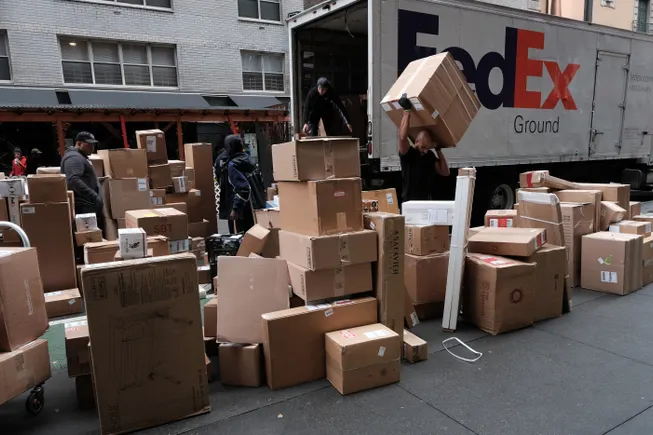
Whether FedEx Ground contractors agree with Patton Logistics and Route Consultant founder Spencer Patton or not, thousands listened over the weekend in Las Vegas as he made the case that the delivery giant must change.
Since sending a letter to FedEx leadership in July about contractor struggles, Patton — an operator running 225 ground routes across 10 states — has become the public face of a movement pushing for higher pay to combat runaway inflation. Sixty percent of the 6,000 contractors in the ground network attended Route Consultant's 2022 Contractor Expo, where Patton urged the network to eliminate Sunday delivery and limit temporary changes.
"I think there are a lot of contractors right now that are really struggling, and that's why they came to the expo and said, 'Something has to change,'" Patton said in an interview. "It's not just Spencer saying, 'Hey, my business is struggling.' It's the network."
Tensions between the ground network and its delivery providers have been brewing for years, with contractors pointing to problems that analysts say FedEx needs to address to hit its profit targets. If the issues go unresolved, independent contractors could take their fight beyond pay and into legal action over how their businesses are classified.
"Long term, there are clear structural issues here," Stephens Inc. analyst Jack Atkins said in a Monday report after attending the Las Vegas event. "We continue to believe the Ground contractor model is broken and inefficient and needs a complete overhaul for the FedEx Ground network to ultimately perform as shareholders expect."
Delivery demand surged, and so did the workload
The contractors who make up FedEx Ground's 10 million daily deliveries are independent of the company. They hire their own drivers and invest in their own equipment. In recent years, as home delivery demand surged, the workload rose for both FedEx and its independent contractors.
Carlos Angulo is one of many contractors whose business grew during the pandemic-driven demand spike. He started his ground contracting business in 2018 with nine full-time employees and nine vehicles. Today, he has 100 employees and 96 vehicles making deliveries in Southern California.
"We were ready for 1,500 packages a day in 2020, but all of a sudden, we were delivering 4,000 a day," Angulo said.

Along with the increased workload, the ground network has also shifted more services onto the shoulders of independent contractors. Last-mile parcel delivery for SmartPost is now handled by contractors through Ground Economy, a service previously handled by the Postal Service. The ground network has also expanded to year-round Saturday and Sunday delivery operations.
But as contractors became busier and invested more to handle the load, they found diminishing returns on what the ground network paid them for deliveries, contractors and industry experts told sister publication Supply Chain Dive.
Contractors are paid 40% less for residential deliveries than for business-to-business (B2B) deliveries, and residential is the service that surged during the pandemic, Deutsche Bank research analyst Amit Mehrotra noted in a July 29 report.
Adding to the financial strain, residential deliveries cost more than B2B deliveries because contractors burn more fuel driving through neighborhoods and drop off fewer packages per stop. Patton said the issue of paying less for more costly deliveries is a major source of the current rift.
"Right now, you have a business that made $300,000 this year and $350,000 next year, but the contractor's workload has doubled," said Tony DiNitto, founder of consulting firm Route Mogul and a former ground contractor. "He's managing twice as many trucks, has twice as many drivers who might call in sick. That's why people want out — they see the trend of declining profitability per route."
Contractor discontent reaches a boiling point in 2022
Delivery demand has slowed since the pandemic peak, which has amplified the impact of FedEx changes on contractors.
Although the holidays are typically the most profitable time of year for ground contractors, many saw lower-than-expected delivery volumes last year because FedEx overestimated package forecasts, according to four contractors interviewed by Supply Chain Dive. Even Angulo's busiest days last year fell short of the company's projections.
As demand waned into 2022, FedEx made clear it was prioritizing more profitable deliveries and passing inflationary pressures onto customers to cushion the blow. FedEx Executive Vice President and Chief Customer Officer Brie Carere said on a June earnings call that fuel surcharges charged to customers improved "revenue quality," or profitability per delivery.
But the ground network has not passed the full benefit of customer fuel surcharges to contractors, which Patton called "over the top." The issue prompted him to publicly call for ground network reforms, including a warning that he would stop operations on Nov. 25 if FedEx did not modify contract terms to account for rising operating costs.
FedEx said in a statement that fuel payments are an indexed payment adjusted weekly based on local prices to respond to price fluctuations. The company also has "fuel islands" at ground hubs and stations offering discounted diesel prices to contractors, and an app for linehaul contractors to identify the cheapest fuel options along their routes.
Still, diminishing returns from the home delivery boom, combined with higher operating costs this year, have intensified the day-to-day financial strain on contractors as small business owners. The number of contracting businesses for sale has increased nearly 65% over the past year, while their asking prices as a percentage of revenue have fallen about 8% since January 2021, according to Atkins.
Contractors close up shop; franchise fight could be next
Even if other contractors heed Patton's call to halt deliveries, it could have minimal impact on ground network operations, said Dean Maciuba, U.S. managing partner at Crossroads Parcel Consulting.
Maciuba noted the timeline of delivery activity during peak season has become more "spread out," meaning the period from Black Friday to Christmas is not as busy as it once was. Also, since the ground network's money-back guarantees to shippers have not resumed since the start of the pandemic, the company may be less concerned about the volume of residential delivery delays, he added.
FedEx said in a statement it is prepared to maintain high service levels during peak season. The company will use short-term contingency agreements with other contractors and, "where appropriate, purchase transportation services" to cover routes that would otherwise go unserved.
The company also noted the ground network and its contractors are adjusting their operating agreements to adapt to changing market conditions, and its contractor attrition rate is "not significantly different" from prior levels.
"Through multiple forums and engagement with thousands of business owners, FedEx Ground understands the impact current economic and market dynamics are having on their businesses and has worked collaboratively to develop solutions," FedEx said. "Over the past three months, more than 1,600 agreements have been successfully negotiated or renegotiated based on the unique characteristics of each business."

As contractor pressure mounted, the ground network also made operational adjustments. Chief among them was suspending year-round Sunday home delivery in certain markets, primarily in less populated areas. Contractors told Supply Chain Dive that the added Sunday work increased operational strain and expenses because there wasn't enough delivery volume to make it economically viable.
While a move like eliminating all Sunday delivery would be "a huge win" for the ground network and its contractors, Patton is also pushing for other benefits that would give contractors protections similar to franchisees. If those protections don't materialize, Patton said he would "explore avenues" to determine whether contractors qualify as franchisees — which would set up another fight between the ground network and the engine of its network.
"My thought is, I want FedEx Ground to give us the benefits of franchisees without having to go through a massive 50-state fight over whether we should be legally classified as franchisees," Patton said.