
Kohl's Faces Transformation Pressure: Investor Pressure and Strategic Confusion Coexist
In 2022, Kohl's experienced frequent investor pressure and rejection of acquisition offers, but experts point out that its core problem lies in a lack of clear brand positioning and consumer experience, leaving the path to transformation still unclear.
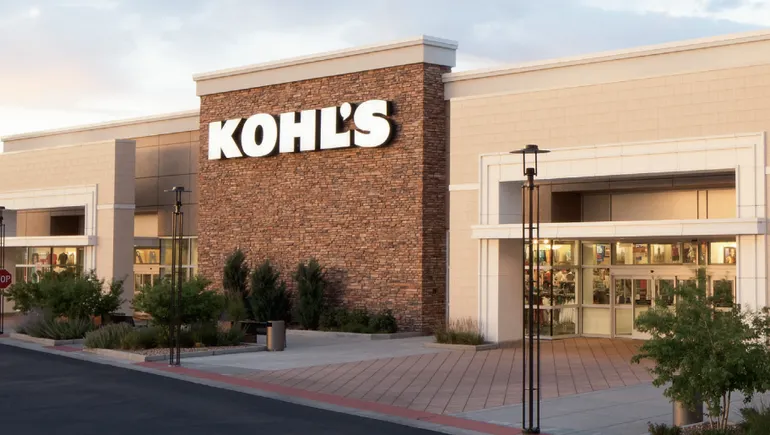
Kohl's experienced a turbulent 2022, but substantive changes were few. The department store spent much of its energy this year responding to financial maneuvers strongly urged by activist investors. Just last week, Macellum Advisors again issued an open letter to Kohl's shareholders, calling for further board restructuring—just a month after the board was forced to publicly support CEO Michelle Gass under pressure from another investment firm.
Also this year, after months of being forced to consider selling or spinning off its e-commerce business, Kohl's rejected an acquisition offer from Franchise Group, the parent company of Vitamin Shoppe, citing the bid as too low. Some analysts believe the company's delays led to a lower offer; in any case, weeks later Kohl's was reported to be considering selling some of its real estate.
Whether selling off some properties or the entire company might please investors aiming to boost Kohl's stock price, in the view of some observers, it is unlikely to truly address what the retailer needs most—rebuilding its brand identity.
"Kohl's needs to occupy a clearer position in consumers' minds and needs to provide consumers with a better experience both online and offline," said Erik Gordon, a professor at the University of Michigan's Ross School of Business, in an email. "Who knows what Kohl's is? Is it a low-end J.C. Penney? Or a Target with some name-brand goods?"
What changes has Kohl's undergone
Kohl's has not always faced such difficulties. As a department store, the retailer successfully served middle-class customers for years, offering a mix of name brands and private labels across categories such as apparel, home goods, jewelry, and toys.
Today, the department store industry is under heavy pressure. Middle-class families have for years struggled increasingly with major expenses such as housing, healthcare, and education, while incomes have stagnated. Meanwhile, the expansion of e-commerce and discount retail has made it easier for consumers to buy non-essential items sold by retailers like Kohl's—including the name-brand goods it offers—at the best prices.
"These mid-tier department stores are not cheap, but it's unclear why their merchandise is better than that of retailers like Target," said Jonathan Zhang, a professor at Colorado State University's business school, in a phone interview. "Twenty years ago, you might have gotten away with it because people had limited information and consumers had less voice. But by 2022, consumers can buy goods anywhere, so the experiential component of retail is more important. And that's where companies like Kohl's and J.C. Penney may fall short—they lack a strong brand identity that resonates with consumers' experiential needs."
Kohl's locations are mostly away from malls, in more convenient neighborhood strip centers, which is still an advantage, but less so than before, and the company may need to shrink store sizes, Zhang added.
But even these stores seem too large, and Kohl's location strategy has not helped it escape the decline of the department store model, noted marketing consultant Brian Kelly.
"Relevance matters, and the breadth of relevance no longer exists," Kelly said in an email. "Store counts are already shrinking. How many more stores need to close? Maybe 400 would work? But then sales would be insufficient because department stores have high operating costs and struggle to be profitable."
What changes are happening inside Kohl's
Kohl's has indeed made some progress recently, such as cleaning up stores, introducing Sephora shops to boost the appeal of its beauty category and attract younger consumers, and planning to achieve $2 billion in incremental sales by 2025. But in the view of Gordon at the University of Michigan, the shopping experience, both in-store and online, remains lackluster and even confusing.
Earlier this year, amid the noise created by some investors, Kohl's put forward a vision to transform from a department store into a "focused lifestyle concept." Key elements of the plan include the partnership with Sephora, opening 100 small-format stores, and improving the women's apparel business. Kirthi Kalyanam, executive director of the Retail Management Institute and marketing professor at Santa Clara University's Leavey School of Business, believes Kohl's efforts are "still a work in progress," and the end goal is not clear.
"I'm not saying they're not moving in that direction," he said in a phone call. "But I don't think they have convincingly articulated—what is the transformation they are undergoing? And what will it look like after the transformation?"
What Kohl's must change
Since 2017, Kohl's has lost share among younger consumers aged 25 to 34 and those over 55, but has gained share among older millennials aged 35 to 44, according to recent research from Cowen & Co.
The company's analysts said the Sephora expansion—which will open shops in about 850 Kohl's stores next year and eventually cover all stores—along with its private brands, could help boost its market share.
"For Kohl's, the near-term catalyst remains the expansion of Sephora shops, with stores opened last year continuing to outperform the rest of the business by high single digits, and stores opened this year outperforming by mid single digits," wrote the Cowen team led by John Kernan. "Additionally, Kohl's is entering a critical period for its private brand portfolio, as core customers seek value, especially in the children's area, which could continue to drive traffic among millennials or new parents."
Cowen also noted that as Kohl's faces ongoing inventory clearance and markdown pressure, improved private brand sales could benefit gross margins.
Experts say that for Kohl's to turn around, it may need to reduce SKU counts, revamp private brands, increase exclusive brands, and redesign stores, much like Target did. Kohl's seems to agree, having stepped up such efforts in recent years. But success requires time, money, and a strong brand identity, Zhang said.
"There's no magic fix in retail, and no quick fix from a time perspective," he said. "Look at Kohl's, what's unique about it? There's no unique store experience, and no unique merchandise. So, what's your story? What's compelling about walking into a Kohl's store or visiting Kohl's website? It's not clear."
Kaarin Vembar contributed to this article.
