
Why is the retail industry keen on 'removing vowels' in brand naming?
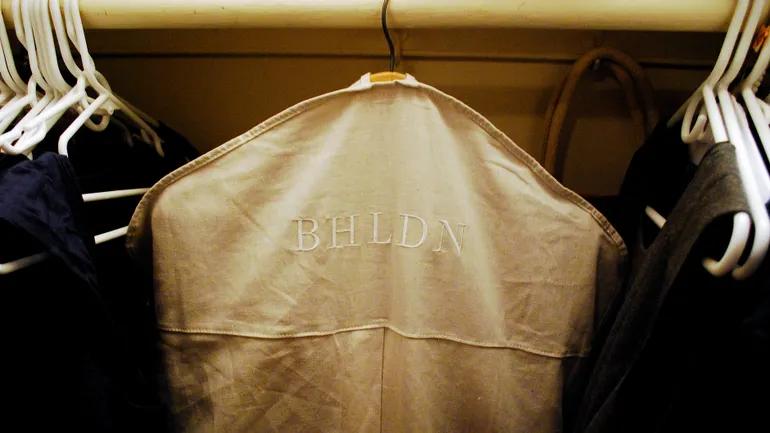
Facing the scarcity of domain names and trademarks, retail brands have adopted strategies such as omitting vowels (e.g., RTFKT, BHLDN) or altering spellings (e.g., Anthropologie) to create distinctive names. This trend stems from practical needs and also carries symbolic meanings of being 'modern and cool,' but research shows that vowel-less names may be perceived as 'rugged' yet not 'refined,' and can affect pronunciation and discoverability. Brand naming requires a balance between differentiation and consumer recognition.
"Rtl" reads far less smoothly than "retail," while "Shppng" can still clearly convey "shopping" even after omitting some letters. With many business names already taken, brands are turning to strategies like misspellings (e.g., Anthropologie), reduced vowels (e.g., MoDRN), or completely removing vowels (e.g., RTFKT) to find unique commercial identities. Domain issues are key to this.
"Finding the right domain name is very difficult. Basically, all four-letter and five-letter words are already registered," said Jonah Berger, a professor at the University of Pennsylvania's Wharton School and author of "Contagious: Why Things Catch On." "So brands need to find ways to differentiate while also securing resources like domains and trademarks."
According to Dr. Abhishek Pathak, who studies how sound symbolism affects consumer perception, some companies register domain names speculatively, then demand high ransoms when others launch brands, exacerbating the naming dilemma. So to some extent, modifying a common word to sidestep trademark or domain issues is more feasible.
But naming strategies aren't purely practical. The earliest companies to shorten names and drop vowels were mostly tech startups, so a short, playful, possibly vowel-less name (like Flickr, Tumblr) gradually became associated with a certain "cool" culture.
"A lot of practices started from very practical reasons, then gradually became tied to associations of being 'modern, smart,'" said Emmett Shine, co-founder of brand agency Gin Lane and multi-brand DTC company Pattern Brands. Shine's Gin Lane has served well-known DTC brands like Harry's, Hims, Warby Parker, and Everlane. His new venture Pattern Brands is a growing collection of DTC home brands, having just acquired towel company Onsen last month.
"I think the potential downside is that names carry the imprint of a specific era and context, just like all brands ending in '-ify' are tied to a certain period," Shine added. "Three to five years later, you might not want your name too deeply associated with a particular era, because perceptions shift as people move past that phase."
The 'hidden language' of brand naming
As Shine mentioned with '-ify' brands like Shopify and Spotify, companies omitting vowels has a long history and isn't always out of necessity. For example, Berger noted the electronic pop band MGMT, founded in the early 2000s, as a successful vowel-less name. Once a group achieves success with a naming pattern, other brands follow suit.
"There was Napster, Friendster, Pixster, and so on," Berger said. "Whenever a new naming convention emerges, other companies or organizations tend to follow."
Brand names—whether misspelled, all caps, all lowercase, or vowel-less—signal to consumers who the target audience is. Shine pointed out that fashion companies and musicians have long defined brands by using hyphens, dollar signs, or even replacing A with Roman numeral V, a language with "in-group exclusivity."
For example, Urban Outfitters' wedding sub-brand BHLDN (pronounced "beholden") uses all capital letters in its logo, which Shine believes aligns more with the fashion world. Tech companies, meanwhile, often spell names in all lowercase. (Urban Outfitters did not respond to requests for comment on why BHLDN was chosen as the name.)
"I think omitting letters is largely just another way of signaling you belong to a particular group."
—Emmett Shine, co-founder of Gin Lane and Pattern Brands
The semiotics of brand language are almost everywhere. In bookstores, thriller covers often feature bold solid colors and large all-caps fonts, while fantasy covers look more whimsical. Shine also mentioned an ad for a death metal concert where most band logos were in black-and-white "neo-traditional death metal style."
"I bring this up to say that once you enter a field, there's a 'hidden language' designed to appeal to specific audiences, not others," Shine said. "This might manifest as omitting vowels, all lowercase, or the so-called 'blanding' aesthetic... I think omitting letters is just another way of showing you belong to a particular group."
Omitting vowels can also imply certain traits about a brand. In a 2022 paper Pathak co-authored, he had consumers evaluate fictional food brand names with and without vowels: vowel-less names were perceived as more "rugged," which could benefit certain brand positions, but were also seen as less competent, less refined, and less sincere.
In fact, much of Pathak's research links specific attributes of words (like sound, length, etc.) to consumer associations. For example, regarding length, people tend to associate longer names with luxury brands, while shorter names with mass-market brands. But according to a 2019 paper Pathak co-authored, this strategy may only work when syllable counts are no more than three or four.
Another paper found that the number of "harsh" sounds in a brand name can lead shoppers to associate the product itself with roughness or softness.
"By harsh, we mean, for example, if a toilet cleaner's brand name contains voiced plosives, consumers will perceive it as more corrosive or better at stain removal; whereas if a lotion's brand name lacks voiced plosives, it will be seen as gentler on the skin," the paper co-authored by Pathak, Gemma Anne Calvert, and Lewis K. S. Lim states.
"All the visible names in the market today remain readable after omitting vowels."
—Abhishek Pathak
Similarly, including or omitting vowels affects the immediate associations shoppers form, for better or worse. While it's easy to mock this trend, brands are making decisions based on what works currently, at least for now.
"Things change, and that's the beauty of it. Maybe someone will launch horror book covers in a completely different style and shift the genre's design direction for a while—but certain core identity elements never fully disappear," Shine said. "There's an underlying logic to why restaurants use certain colors, why galleries use certain colors, why airports use glass."
As for vowel-less phrases, the social media and texting era has reduced everyday words to abbreviations or shorter forms. For instance, "Pls" has become a common way to write "please," and "sry" stands for "sorry." Pathak said retailers adopting vowel-less names might be targeting younger audiences more familiar with abbreviations. But that doesn't mean you can omit arbitrarily.
"If you look, all the visible names in the market today remain readable after omitting vowels," Pathak said. "Like 'srsly'—when you remove the vowels from 'seriously,' you can still read the word."
 RTFKT was acquired by Nike in 2021
The 'special meaning' of vowels
At the other extreme are names that aren't intuitively pronounceable, like BHLDN, or RTFKT—one of Nike's newer acquisitions. The name might stand for "artifact," but it takes some imagination to figure out. (Nike did not respond to questions about the name's origin.)
"Take MNML—hmm, I think that's 'minimal,' but I'm not sure. I'd have to figure out how to pronounce it," Berger said. "In some ways, that's certainly bad because people don't know how to say your name. But on the other hand, it does make those who know the correct pronunciation feel cool and in the know."
The potential weakness of this strategy lies in brand awareness and discoverability. Vowel-less names can make it harder for consumers to find a brand, especially when searching phonetically. Misspelled URLs might lead shoppers to other sites, and brands may need to spend more to buy adjacent domains.
"Someone is waiting to take over your space," Pathak said.
A slightly less severe consequence is that consumers might popularize a different pronunciation, diluting the brand's intended meaning. Pathak cited South Korean musician "Psy" as an example, where some fans pronounce his name as "P-S-Y."
Although hard-to-pronounce names can give "insiders" a cool factor, there are other psychological considerations.
"Consumers associate anything new with ease of processing—there's literature showing that if something is hard to process, it leads to negative evaluations. For example, if a drug name is hard to pronounce, people often think it's completely ineffective," Pathak said. "If it's easy to pronounce, people assume it has some effect."
When Pathak tested consumer reactions to brand names with and without vowels, respondents tended to view fictional vowel-less names more negatively, including on product attributes like price, quality, and health. Certain vowels also carry positive associations, and omitting them can strip brands of those advantages.
"I don't think Tumblr became Tumblr because it dropped the 'e'."
—Emmett Shine, co-founder of Gin Lane and Pattern Brands
Brand names might remain readable with consonants alone, but according to a 2021 paper by Pathak and Calvert, vowels "provide acoustic cues, melody, and prosody in speech." Long vowels—like the one in "deep"—carry distinct positive associations.
"Long vowels are almost always among the earliest sounds babies make, are considered pleasant to the ear, and are therefore widely used by poets and writers as assonance tools," Pathak and Calvert wrote. "Thus, including long vowels in brand names seems likely to enhance their pleasantness and modulate consumer expectations of corresponding products in predictable ways."
In a series of studies, the authors found that consumers perceived brand names with long vowels as "significantly more" associated with sweetness compared to those with short vowels. Pathak also noted that long vowels often appear in lullabies or romantic phrases in certain languages.
"All these sounds carry special meanings for consumers," Pathak said.
In short, brand naming is a complex endeavor. Practical considerations like SEO and domain availability are just the tip of the iceberg. Brands need to navigate a lexical world of hidden languages, special meanings, and unconscious associations, and decide which factors matter most.
"I think at the end of the day, there are many mediocre brands with good names, and many great brands with average names," Shine said. "I don't think Tumblr became Tumblr because it dropped the 'e,' but because of its service and the value it provided at the time. Similarly, Spotify didn't become the world's dominant music streaming platform just by adding '-ify'."