
A Simple Solution to the Fashion Sustainability Dilemma: Produce Less
The environmental impact of the fashion industry has long been criticized, but cutting-edge eco-friendly material solutions may have limited effectiveness. Multiple scholars point out that the truly effective path is to reduce total production and extend the lifespan of clothing. The article cites multiple research data, revealing the prevalence of overproduction and incineration of inventory, and introduces legislative developments in France, Spain, and at the EU level.
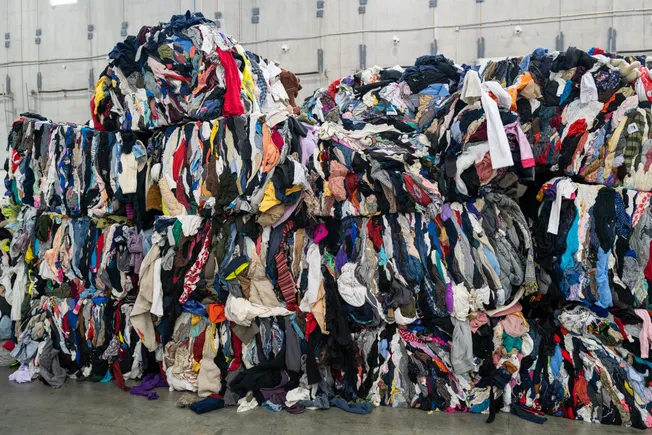
The fashion industry's "style shift" toward environmentally friendly practices has long been overdue. A review article published in 2020 in the academic journal Nature Reviews Earth & Environment painted a worrying picture: the industry contributes about 20% of industrial water pollution, 30% of marine microplastic pollution, and 3% to 10% of greenhouse gas emissions. At the same time, it is exacerbating the global waste problem—generating over 92 million tons of waste annually, of which only 1% is recycled into new clothing.
In response, some forward-thinking and appealing solutions have emerged: shirts made from recycled plastic bottles, biodegradable fabrics derived from mushrooms, bacteria, or banana leaves. However, while these solutions may have some effect, they struggle to address a more critical factor—the overall volume of production remains too high. A report from the Ellen MacArthur Foundation shows that between 2000 and 2015, global clothing production doubled, exceeding 100 billion items. The World Economic Forum estimated in 2016 that annual production had reached 150 billion items.
"This is exactly the opposite of what is needed to reduce environmental impact," said Ingun Grimstad Klepp, a professor of clothing and sustainability at the Norwegian Institute for Consumer Research at Oslo Metropolitan University. "For the environmental burden, the most important thing is to reduce production volume and increase the frequency of use of each garment. It's actually very simple."
Although shifting to more environmentally friendly materials sounds promising, according to a 2020 UN report, fiber production accounts for only about 12% to 15% of a garment's environmental impact (involving pollution, greenhouse gas emissions, and resource consumption). Even if this portion were halved by switching materials, the overall impact would only be reduced by 6%. "That's too little to have potential," Klepp said. "But what if we halved clothing production today? That's feasible, and it wouldn't affect our access to clothing."
One obvious sign of overproduction is that luxury brands often burn or destroy unsold inventory. For example, Burberry burned $38 million worth of goods in 2017. Richemont, which owns brands such as Cartier and Montblanc, destroyed $572 million worth of watches the same year.
For brands like Burberry, "this is somewhat seen as a brand protection strategy—though a bit paradoxical, to maintain exclusivity and ensure unsold goods don't end up in outlets and damage the brand image," said Timo Rissanen, an associate professor of fashion and textiles at the University of Technology Sydney and co-founder of the Union of Concerned Researchers in Fashion. He is also a co-author of that 2020 Nature paper. "But especially over the past two decades, this practice has become quite common."
In 2018, H&M made headlines for accumulating $4.3 billion in unsold goods. According to the Danish investigative journalism program "Operation X," between 2013 and 2017, at least 60 metric tons of unsold clothing were sent to power plants for incineration, although H&M issued a statement saying these products were contaminated with mold or had excessive lead levels, and emphasized that the company does not burn functional clothing.
Following media coverage and criticism from investors and consumers, Burberry publicly announced in 2018 that it would immediately stop burning unsold goods.
Because companies are not required to report the volume of destruction, the exact amount of clothing burned or destroyed each year is difficult to determine. A study commissioned by MVO Nederland showed that about 21 million items (6.5% of inventory) in Dutch stores went unsold, with about 33% of those sold only after discounts. The study found that most unsold inventory was donated or recycled, but 600,000 items were destroyed before ever being worn.
The financial incentives for destroying clothing
Although it seems counterintuitive, destroying intact unsold clothing has become financially rational. "These fast fashion products are just too cheap," said Elizabeth Napier, an assistant professor of marketing and international business at the University of Toledo in Ohio, who has studied the practice of destroying unsold goods.
Napier explained that fast fashion attracts consumers and stimulates frequent purchases by quickly bringing runway designs to retail stores at low prices. But demand is difficult to predict precisely, especially when production is overseas and goods take time to arrive. For large corporations, the goods themselves cost very little, so destroying them does not mean a significant loss. Clothing production is typically outsourced to countries with much lower wages, often with lax environmental and labor regulations where human rights abuses may go unpunished. With enormous production volumes, the cost per item drops, and the goods are not made to last. "This means consumers have to buy repeatedly," Napier said.
There are also financial incentives for destroying clothing. In the United States, if imported goods are exported or destroyed without being used, companies can apply for a refund of 99% of the tariffs on those goods. In Italy, companies can also claim tax credits for destroying unsold goods.
In the sales race, destroying unsold goods becomes a cost-effective sacrifice, even though they consume natural resources, contribute to atmospheric and water pollution, and expend human labor.
Rissanen pointed out that a key factor in overproduction is the rise of polyester. Rissanen and colleagues wrote that since the 1970s, natural fiber production has remained relatively stable, while polyester production has exploded. It is the same fossil fuel economy that makes these cheap and difficult-to-recycle polyester garments possible, "creating an illusion that there are no limits, as if we can keep producing endlessly," Rissanen said. "In traditional business thinking, growth is usually seen as good, and the means of growth matter less than the growth itself. It's like collectively believing the lie that there are no limits, when in fact, limits do exist."
Is progress real?
After the clothing burning controversy, Burberry said it would begin working with the Ellen MacArthur Foundation, a nonprofit organization dedicated to promoting the transition to a circular economy. However, Burberry is currently not on the foundation's partner list. The nonprofit declined to comment on whether it still works with Burberry.
Burberry has also made other practices public. In its 2022 Code of Conduct, the company committed: "For surplus materials or unsellable finished goods, we will reuse, recycle, or donate them. We will never destroy unsellable finished goods." The company also stated in its 2022 annual report that it donates raw materials and finished goods to charities, design schools, and colleges, and partners with UK second-hand resale and rental company My Wardrobe HQ to sell and rent new and used items.
H&M also joined the Ellen MacArthur Foundation in 2016 and announced its ambition to become a circular business by 2040. Since then, it has launched several initiatives to reduce its carbon footprint, including establishing repair and recycling programs, launching its brand resale platform H&M Pre-Loved, and releasing children's clothing lines aimed at using sustainable materials. In early 2023, the Norwegian Consumer Authority required H&M to disclose the amount of unsold clothing in Norway. A company spokesperson told Sourcing Journal that unsold clothing in global stores amounted to 75 tons, but all of it was donated, resold, or recycled—none sent to landfills or incinerators.
However, Napier said that partnerships between brands and nonprofits do not necessarily mean the problem is being solved. She has studied such collaborations. "It's hard to tell what is real action and what is just lip service or an attempt to 'greenwash,'" she said. "I have never found tangible results." For short-term collaborations, results are even scarcer, and that is the norm. She cited two examples: in 2015, H&M partnered with WWF to launch a sustainable cotton initiative, but the nonprofit ended the partnership in 2019 after H&M failed to take certain sustainability measures. Burberry also partnered with Oxfam to donate unsold clothing, but after the burning scandal broke, Oxfam immediately ended the partnership.
Companies might argue that overproduction (even on a large scale) is inevitable because consumer demand is difficult to predict. But Napier pointed out that sophisticated algorithms for targeted advertising are everywhere. "You can read the information on my browser right now and push these products to me. Why is there still an overproduction problem?" she said. "Why can't we accurately predict what consumers will or won't buy?" If companies have not yet stopped growing and overproducing, Napier believes it is because they have not yet been held accountable.
"Good business needs good regulation," Klepp said. Otherwise, smaller brands that might be more ethical will not be able to compete. "They need a level playing field. The fast fashion system needs to become weaker, because we need to make it easier for the 'good guys.'"
Some progress has been made in regulation. In 2020, France passed a law banning the destruction of unsold goods. The French Ministry of Ecological Transition's English description of the new law quantified the current problem: France destroys €630 million worth of products annually, including 10,000 to 20,000 metric tons of textiles. "That's the equivalent of one to two Eiffel Towers in weight," the statement said. The law took effect at the end of January 2021, and the ministry's message was clear: "In the medium and long term, the entire industrial sector will have to rethink inventory management to reduce overproduction." As of December 31, 2024, Spain will also ban the destruction of unsold textiles.
Currently, the EU is pushing for similar measures. In 2022, the EU launched its Strategy for Sustainable and Circular Textiles, which includes a campaign against fast fashion. The regulation on Ecodesign for Sustainable Products is in the negotiation phase, potentially going to a vote in the Environment Committee in June and a plenary vote in July, meaning negotiations with EU member state governments could begin in the autumn. The current draft lays the groundwork for a future ban, first requiring companies to report the destruction of unsold goods. Meanwhile, the European Parliament's Committee on Environment, Public Health and Food Safety has prioritized banning the destruction of unsold textiles in its draft position.
Klepp worries that if donating or recycling unsold goods is difficult, a ban on destruction may have limited effect. She and her colleagues propose that instead of an outright ban on destruction, it should be strictly tracked and made extremely costly—thereby making overproduction as expensive for companies as it is for the environment.
Regardless of the approach, Napier believes that without regulation, companies are unlikely to break the overproduction habit on their own, unless individual CEOs have strong environmental values and impose them on the company. From her experience talking with executives, she is not optimistic. "When I asked them about sustainability issues, I was laughed out of the room."
