
Is Amazon Just Another Retailer? The U.S. Federal Trade Commission Doesn't Think So
The U.S. Federal Trade Commission, along with 17 states, has filed an antitrust lawsuit against Amazon, accusing it of illegally maintaining a monopoly through punitive and coercive tactics. Amazon and some analysts argue that the company is just one player in a vast retail market and that its practices are standard industry behavior. This article outlines the arguments from both sides and expert opinions.
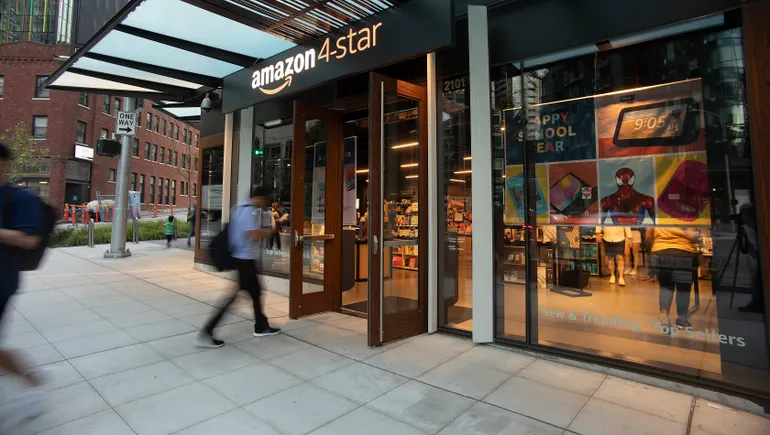
About 20 years ago, Jeff Bezos told CNET Magazine that the then eight-year-old company wanted to be a "new kind of existence" in retail. "There is no physical counterpart to what Amazon is becoming, and our vision has not changed over the past few years," he said.
However, in the antitrust lawsuit filed against Amazon by the U.S. Federal Trade Commission (FTC) along with attorneys general from 17 states, regulators point out that such times are over. The lawsuit alleges that Amazon has employed "a series of punitive and coercive tactics to illegally maintain its monopoly," particularly targeting third-party sellers on its platform, who are responsible for 60% of the site's product sales.
Just a part of a vast market?
As Amazon prepares to face these allegations in court, several analysts and the company itself seem to be downplaying its image as a unique and powerful player. They argue that the anti-competitive behaviors alleged by the FTC are commonplace in the retail industry and have persisted for decades.
"Amazon may no longer be the small business it once was, but we are still just a part of a vast and dynamic retail market where consumers and sellers have many choices," David Zapolsky, Amazon's general counsel and senior vice president of global public policy, said in a blog post on September 26. This view is also shared by some retail analysts and antitrust experts. Neil Saunders, managing director of GlobalData, noted that Amazon's significant contraction of its physical retail business last year is one example of its weakness in a diverse and competitive market.
"Retail is highly competitive, which is one of the reasons Amazon must constantly innovate and strive to succeed. It's also why Amazon sometimes fails, such as in several store projects and some grocery market attempts," Saunders said in an email comment.
Walmart's recent aggressive moves in its online marketplace and pricing initiatives are seen by several analysts as taking share from competitors like Amazon and Target, further evidence that Amazon faces intense competition. Arun Sundaram, senior equity analyst at CFRA Research, used the term "tough battle" (like many commentators) and predicted limited substantive changes for Amazon from the lawsuit.
"We see evidence that the U.S. online market is highly competitive, with the recent success of Walmart's third-party marketplace being one example. Additionally, the FTC may find it difficult to prove that Amazon's current business practices harm consumers. Overall, we see a low risk of major structural changes for Amazon," Sundaram wrote in a research note.
Common retail practices
Experts point out that not only is the overall retail environment highly competitive, but the specific anti-competitive behaviors alleged by the FTC are also long-standing industry practices. John Mayo, founder and executive director of the Center for Business and Public Policy at Georgetown University and an antitrust scholar, noted that the seller fees, pricing requirements, private-label prioritization, and search result handling mentioned in the lawsuit all have counterparts in physical stores. For example, retailers reach favorable pricing agreements with suppliers, earn higher profits from private-label brands that imitate name brands, and charge extra for prime shelf space and marketing.
"Coca-Cola or Pepsi might pay for end-cap positions, or brands like Bush's Beans. No one tells consumers when they walk into a supermarket that Bush's Beans paid for that spot. This is an extremely widespread business practice both online and offline, generally not seen as anti-competitive but as a way to differentiate and attract more business," Mayo said in a phone interview.
Not all antitrust experts dismiss the FTC's arguments. Greg Asciola, partner and chair of the antitrust and competition litigation practice at DiCello Levitt LLP, said the case is complex, involving a "web of interrelated conduct," but also "shows the FTC has a deep understanding of the markets involved." "The complaint plausibly alleges that Amazon violated federal and state antitrust laws through exclusionary monopolistic conduct, harming competition in two markets and injuring sellers and consumers through higher prices and lower quality," he said in an email. "While this case may involve some complex issues, antitrust law has successfully handled complex industries and multifaceted conduct over the past century, and this case should be no exception."
The antitrust argument
In short, the FTC alleges that Amazon wields power over its platform sellers, harming both sellers and consumers. According to the FTC's complaint and some sellers, the e-commerce giant locks sellers into its ecosystem—including the Prime audience and its warehousing and delivery network—while continuously raising fees and hindering sellers from selling through their own websites or other platforms.
The argument for this practice is that it all harms sellers and ultimately consumers. Amazon and some experts argue that requiring sellers to offer the lowest prices on Amazon benefits consumers. However, the FTC and some sellers say this forces overall prices up, because the high costs of operating on Amazon's marketplace mean sellers either raise prices on other channels or lose money on Amazon.
"What we need to focus on is that millions of Americans trying to save money by comparing prices on online shopping platforms are actually being deprived of the opportunity to buy goods at competitive prices and enjoy higher-quality services, and they get a degraded online shopping experience," Asciola said. "This is just another example of a corporate giant using market power to line its own pockets and blatantly take advantage of consumers."
Can other retailers do this?
Asciola noted that this case is not just about retail or online marketplaces, but also involves the "high-tech sector." Three years ago, Amazon faced congressional scrutiny over allegations that it used seller data to copy best-selling products for its private labels. Earlier this year, the company said it would reduce its private-label brands to fewer than 20.
Other aspects of Amazon's high-tech power remain mysterious. Large portions of the FTC's complaint are blacked out, centering on a proprietary algorithm called "Project Nessie." It is unclear how much detail the public will learn. The FTC describes it as a secret price-manipulation algorithm, while the company's growing advertising system manipulates search, leading to less relevant search results and higher charges to consumers.
"In a competitive environment, Amazon's decisions to raise prices and lower service quality would create opportunities for competitors and potential competitors to attract business, gain momentum, and grow," the FTC said in its complaint. "But Amazon has employed illegal monopolistic tactics to foreclose that possibility."
Some sellers say Amazon's tight control over pricing and search severely limits their growth both on and off the platform. "According to Amazon's own employees, if you sell the exact same product on Target.com for one cent less than on Amazon, your listing on Amazon suffers what's called 'buy box suppression.' Amazon's own people say if the buy box is suppressed, you lose 40% of your normal revenue," Jason Boyce, a former Amazon seller, founder of seller consultancy Avenue7Media, and author of "The Amazon Jungle," said at a video press conference on September 26. "This is one of the pricing competition issues the FTC points out—they are actually raising prices. If all retailers are not allowed to control brand prices, I think this will open the door to competition."
Sellers also say they are forced to pay high fees to appear in Amazon search results. The e-commerce giant has in recent quarters touted advertising as a fast-growing and profitable part of its retail business. Amazon's so-called "ads" are more of a search priority that interferes with organic search results. When search results are "organic," they are determined by algorithms, not by seller payments or other factors.
"Amazon's online storefront once prioritized relevant organic search results, but has since shifted and is now saturated with paid advertisements," the FTC said in its complaint.
The FTC is not alone in believing this has degraded the customer experience. Evercore analysts warned last year that consumer frustration with Amazon is rising due to an influx of poor-quality products, delivery delays, and "increasing ad inventory in product search results."
The path forward
This case could drag on for years, and may not even formally begin trial yet. Nevertheless, it could still have an impact, perhaps even soon. The EU has already obtained concessions from Amazon, and some sellers say it would be hugely beneficial if these concessions applied to the U.S. In December, the EU announced new rules restricting Amazon's use of seller data from its platform, enhancing sellers' access to the "buy box," and easing conditions for sellers and carriers to participate in Prime.
At a video press conference following the FTC's announcement of the lawsuit, Stacy Mitchell, co-executive director of the Institute for Local Self-Reliance, told reporters that the ideal outcome would be to break up Amazon's business—which now includes cloud services, warehousing and delivery, retail, streaming, and more—into independent parts. This would force Amazon to follow its own rules, including paying the fees it requires platform sellers to pay. However, in a 2017 Yale Law Journal article, current FTC Chair Lina Khan said that breaking up the e-commerce giant by business line might be politically unfeasible.
More realistically, several Amazon sellers who joined Mitchell at the press conference last week said they hope Amazon will retract some of its harsher requirements. Mitchell said the mere existence of the lawsuit might achieve this. "I think filing the lawsuit itself, historically, does make companies behave better," she said. "So one of the great benefits of this happening is that it will make Amazon more cautious in its actions now."
