
Why Gap's Khaki Soul Was Lost: The Brand's Plight from Cultural Definitor to Discount Dependent
Gap once defined American style with khaki pants and basics, but now finds itself in declining sales and creative exhaustion. This article reviews its journey from its founding in 1969, classic marketing campaigns, to the failed collaboration with Ye, analyzing the deep reasons behind the brand losing its soul.
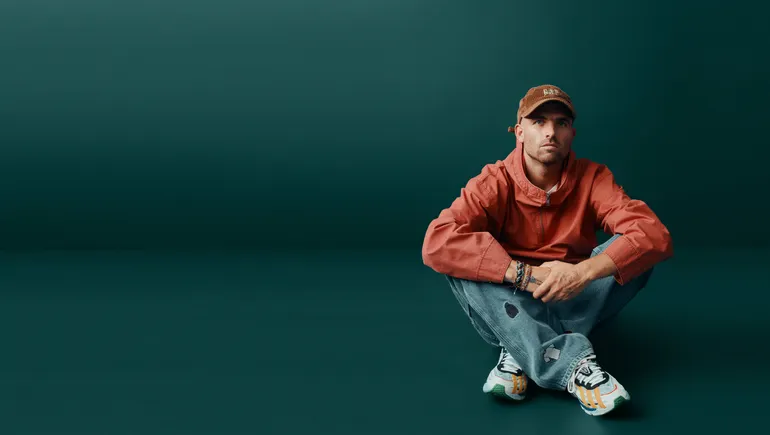
Similar to brands like J. Crew and Ulla Johnson, Gap is curating its own vintage resale business. Earlier this year, designer Sean Wotherspoon searched for Gap items from the 1980s, 1990s, and 2000s. This month, the brand released a new collection curated by him, inspired by Gap styles from those decades.
In other words, those were the decades when Gap defined American style.
Defining, or even elevating, American style as Gap once did is no easy feat. Unlike Ralph Lauren's evocative definition of a "WASP-y" American West influence, Gap represented a democratic, inclusive, and diverse America, according to Thomai Serdari, academic director of the Fashion and Luxury MBA program at NYU Stern School of Business.
"In my mind, Gap represented the good things about America," she said via video conference. "It was opportunity, the opportunity to be creative, to go to college, to make friends, to play soccer or basketball. Every generation in America, regardless of ethnicity or race, looked good in Gap. Gap didn't completely break the rules, but it wanted you to interpret it in your own way—that's why the brand could adapt to everyone's personality. Unfortunately, I don't see that anymore."
How Gap gave basics personality
Gap was founded in 1969 as an independent store in San Francisco selling third-party brands. Five years later, it transformed into a specialty retailer with its own merchandise. The brand still sells a vast amount of clothing, with net sales of $3.8 billion last year.
That figure is down from a peak of $7.3 billion 20 years ago, and the decline has not stopped.
"Gap faces a considerable challenge: managing entry-level prices while offering mid-market 'everyday clothing.' That's no easy task," said Jeffrey Sward, founding partner of Merchandising Metrics, in an email. "Personally, I think it's very important to remember the 'every generation' dimension of Gap's heritage. The importance of marketing cannot be underestimated. Gap's peak was built on ordinary products and extraordinary marketing. I've always thought the 'Swing' ads were a perfect example, long before we recognized the effects of social media."
"Khaki Swing" was a vibrant 1998 TV commercial featuring dancers in Gap khakis, vests, T-shirts, and button-down shirts doing the Lindy Hop to Louis Prima's 1956 hit "Jump, Jive, an' Wail." The ad capitalized on a brief revival of swing dancing and helped fuel the trend. Prima's wife and performing partner Keely Smith, who also sang on the track, told the South Florida Sun Sentinel in 2002 that the ad reignited her career.
"That Gap ad worked wonders," she told the paper.
By then, Gap had firmly established itself as a savvy marketer of basics. In the late 1980s, the brand launched a print campaign called "Individuals of Style," which was exhibited at the National Portrait Gallery in 2007.

Perhaps the brand's boldest ad campaigns featured cultural icons who weren't wearing its clothing at all—some of whom had died before Gap was even founded.
Audrey Hepburn (or more precisely, footage from her 1957 film "Funny Face") appeared in a 2006 Gap black legging ad. Unlike the version where she awkwardly dances in front of Fred Astaire, Gap's edit had her leaping into a mashup with AC/DC's "Back in Black."
However, the ultimate example of selling clothes without showing a stitch came earlier, in Gap's 1993 "Who Wore Khakis" campaign. The marketing team combed through photo archives looking for stars from all fields—including Mohammed Ali, Salvador Dali, Miles Davis, James Dean, Amelia Earhart, Ernest Hemingway, Arthur Miller, Andy Warhol, and John Wayne—who wore khakis and other clothing that might be found in Gap stores.

At the turn of the century, Gap's marketing still had broad cultural influence. This summer, writer, comedian, and DJ Diallo Riddle discussed the impact of Gap ads in the early 2000s on the "One Song" podcast.
Riddle recalled discovering a soul song of the time through a Gap ad, which he said was common then. "But back then, Gap ads could make songs popular. I'll never forget that Gap ad using Bill Withers' 'Lovely Day,' with a bunch of cool dancers, and suddenly all the DJs started getting requests to play Bill Withers. Not 'Just the Two of Us,' but 'Lovely Day,' which remains one of his most moving works. Back then, Gap was like TikTok in making songs popular."
A lack of creativity
However, as the 21st century progressed, Gap struggled to reflect that American spirit that diverse groups of people could embrace and be willing to buy. Its growth relied heavily on expanding its store footprint, a massive expansion that the company later walked back.
"I remember in my neighborhood near NYU, there were several Gap stores facing each other. It was crazy," Serdari said. "So that was artificial growth. Analysts were happy with the growth, but it wasn't real, sustainable growth."
Discounting also began to be a draw. In 1994, to compete with retailers like Target, discount stores, and fast-fashion outlets—which attracted customers with low prices and appealing designs—the company founded Old Navy. The brand took off quickly, reaching $1 billion in sales within four years. Old Navy steadily caught up to its higher-priced sister brand, and by 2014, its performance was skyrocketing while Gap was in freefall. In 2017, the company announced that Old Navy would be the core of its growth strategy.
As Gap's relevance waned, lower prices helped Old Navy replace it as Gap Inc.'s sales engine
Internally, besides competing with its own lower-priced sister brand, Gap lost the merchandising and marketing creativity that had once resonated strongly, experts say. Some analysts attribute the problem to the tenure of Art Peck, a former Boston Consulting Group executive who spent 15 years at Gap Inc. and served as CEO of the parent company from 2014 to 2019, when it also operated Banana Republic (acquired in 1983) and athletic apparel brand Athleta (acquired in 2008).
Serdari believes that even earlier, data began to replace innovation at the Gap brand.
"I think for them, the key was losing that creative spark, shifting focus to bringing in a lot of data analysis, trying to predict the market based on big data," she said. "Big data is very useful, but without creative talent at the helm tying it all together, it's meaningless. I don't understand why there's such a huge divide—it's only in America, not in Europe at all—where we can't reconcile the analytical side of a company with the creative side. That's basically their problem; technology promised a revolution, but you can't handle a creative industry that way."
Perhaps Gap realized this to some extent. Some point to its ill-fated collaboration with Kanye West (now known as Ye) in 2020 as an attempt to return to artistry, or at least to attract attention. Wells Fargo analysts had predicted Yeezy Gap could become a billion-dollar brand, but its slow rollout—initially a series of puffer jackets—disappointed many. The collaboration collapsed in 2022 as Ye exhibited problematic behavior, including antisemitic and racist remarks.
"The reality is, you hired a Yeezy who had no merchandising skills at all," said Lee Peterson, executive vice president at WD Partners and a former buyer at The Limited, in a phone call. "That jacket they put out was the worst thing I've ever seen—it didn't even have a zipper. I thought, this is going into Gap?"

As of August—coinciding with Gap's 54th anniversary—Gap Inc. welcomed new CEO Richard Dickson, a former Mattel executive. Given the notable Barbie revival during his tenure, he faces pressure to achieve a brand resurgence. For any overhaul of Gap, he will work with Mark Breitbard, who returned to the company in 2017 and has led the Gap brand since 2020.
However, Gap is not Barbie.
"Gap is extremely dull, making it nearly impossible to attract customers to buy its products—especially at its high full prices, so it often resorts to discounts to clear inventory," said Neil Saunders, managing director at GlobalData, in an email. "The Gap brand has long been the problem child of the group, and its market relevance is one of the biggest issues new management must address if they want to turn the company around."
Gap's collaboration with Sean Wotherspoon—reaching back decades—runs parallel to a nostalgia marketing campaign that acknowledges Gap's former place in American culture. Serdari believes these may signal that the company is beginning to realize what it takes to offer meaningful products at Gap. But to regain its soul, the brand must loosen its reliance on data analysis—which only reflects the past—and get creative again, she said.
"They need someone who excels at branding, merchandising, and storytelling. They also need different designs, because the current ones have no personality," she said. "But people still dress that way, wearing khakis and hoodies, so the brand isn't outdated or behind the times. Why can't you revive a brand with such a long tradition?"
Clarification: This article has been updated to include more information about Gap's collaboration with Sean Wotherspoon.