
Tractor Supply's 'Rescue' Move Instead Raises More Problems
Under three weeks of social media pressure, Tractor Supply announced at the end of June the elimination of DEI roles, the withdrawal of carbon emission targets, and the termination of support for Pride events. While intended to appease some customer dissatisfaction, this move has triggered backlash from another group and brought multiple new issues involving reputation, customer base, competition, and internal stability.
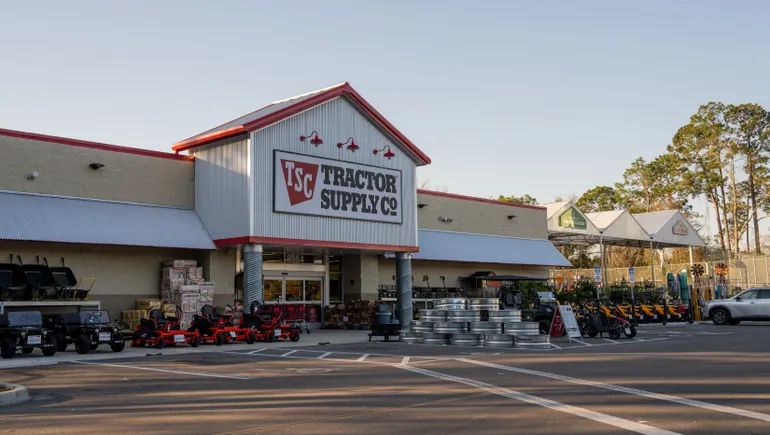
After three weeks of intense criticism on social media over policies related to diversity and climate initiatives, Tractor Supply issued a lengthy statement announcing it would abandon these policies. In late June, the retailer said it wouldeliminate all diversity, equity, and inclusion (DEI) positions, withdraw its carbon emission goals, and end support for Pride events and voting.
Now, this move has triggered another wave of backlash.
The company said its actions were based on customer feedback, but activist Robby Starbuck, who had fomented online protests against Tractor Supply's "woke" direction, has already claimed credit on social mediafor this outcome. While Starbuck's supporters may see Tractor Supply's inclusivity and sustainability measures as problematic, other customers hold the opposite view of its retreat.
Tractor Supply may hope this storm will subside. The company did not respond to multiple requests for comment for this article, has disabled comments on its social media accounts, and has not updated related posts since the statement. But several experts point out that it now faces the following four new problems:
1. Abrupt departure from long-held values and goals
The retailer neither confirmed nor denied that Starbuck's pressure was the driver of its major policy shift, but this leaves the impression that the retreat was not well thought out, experts say.
"Being bullied on social media is tough, and all companies need contingency and crisis plans to deal with it," Jo-Ellen Pozner, a management professor at Santa Clara University's Leavey School of Business, said in an email. "Engaging with activists can sometimes help, but my best advice is: think seriously about corporate values before disruptions occur and use them to guide decisions. Yielding to activists against your values can be dangerous."
Tractor Supply had indeed seemed to think through its policies carefully. Before the recent statement, executives had publicly touted years of work on diversity and sustainability. In November, in remarks to Morgan Stanley analyst Simeon Gutman,Tractor Supply's Chief Financial Officer and Treasurer Kurt Barton described the retailer as"a purpose-driven company." He said that in 2021, after meeting goals set in 2018, the company strengthened and elevated its environmental, social, and governance (ESG) targets, focusing on DEI and environmental sustainability.
"With the launch of the ESG strategy and all the work we've done on DEI and team members, I think what we've accomplished over the past two years has been quite remarkable."
— Kurt Barton, Chief Financial Officer and Treasurer of Tractor Supply
In April, the company said it wouldreduce carbon emissions in line with the Science Based Targets initiative (SBTi), covering its internal operations and supply chain; it currently still shows as "committed" on theSBTi dashboard.
"We are unapologetic about investing in our employees. Our goal in stores or online is to solve problems and answer questions. We are a relationship business, not a transactional one," Barton told Gutman. "Our team members don't just stock products for customers to pick up; they're there to interact. So that's our most important asset. Therefore, with the launch of the ESG strategy and our work on DEI and team members, I think what we've done over the past two years is quite remarkable."
Barton was the executive who signed the withdrawal statement filed with the U.S. Securities and Exchange Commission last month,the withdrawal statement filed with the SEC.
Alison Taylor, a professor at New York University's Stern School of Business and author of "Higher Ground: How Businesses Can Do the Right Thing in a Turbulent World," said that to minimize the impression that its DEI efforts were overly politicized, the company could have adjusted these efforts or clarified its stance, depending on its marketing and corporate goals. But she said by phone that abandoning long-term policies based on a heated campaign only exposes the company to more criticism.
"The fundamental problem with anchoring everything to reputational risk is that if you sway with the wind, depending on who's yelling at you, you'll look completely directionless," she said. "I understand companies fear retaliation. I talk behind the scenes with many companies about how they adjust their statements. But what Tractor Supply did wrong was appear reactive, as if it had no internal compass."
2. The customer base is more diverse than imagined
According to research from the Brookings Institution, in 2020, nearly a quarter of the U.S. rural population was people of color, and the share of people of color in the median rural countyrose by 3.5 percentage pointsbetween 2010 and 2020. The research also found that "rural counties in the South and West are especially racially and ethnically diverse—with a considerable number of these rural areas having people of color as a majority or near-majority."
According to a 2019 report from the Movement Advancement Project,a 2019 reportthe share of rural residents identifying as LGBTQ+ is similar to that in urban areas.
"Rural America is very diverse, whether by race, ethnicity, sexual orientation, or faith," Ryan Goodman, an agricultural communications consultant who grew up on a cattle ranch in Virginia, said by phone. "It's not 100% Christian conservatives forming rural community networks. That's important. So how do we bring light to those who aren't always the loudest, or empower allies to help create spaces where diverse people are included?"
Goodman's first job was at a Tractor Supply store outside the family ranch, and a few years ago he also began advocating for LGBTQ+ people in agriculture, despite some concerns about being more publicly visible.
"I'm not surprised that a retailer like Tractor Supply came out and withdrew its work on DEI, because I understand the conversations happening in rural communities. Unfortunately, I think a small but loud voice played a big role," he said. "But there are many people in rural communities who want to be allies to marginalized groups, but they don't always know how, or they don't always have a comfortable space to take the next step."
John Boyd, who has for years tried to work with Tractor Supply to support Black farmers, has run out of patience. Last week, the National Black Farmers Association he leadscalled for CEO Hal Lawton to step down。
. "They yielded to a blogger who tried to misrepresent them as 'woke.' You know, I put the plow in the soil like anyone else," he said by phone. "What I want to tell Tractor Supply is that they need to signal that they also want Black farmers' business."
As a marketing executive, Goodman finds that younger people in rural communities are generally more open and positive toward diversity, equity, inclusion, and sustainability goals. Two years ago, Lawtontold analyststhat the retailer's "new customers continue to skew younger," partly due to "net out-migration from cities, driven mainly by millennials."
The hobby farmers that Lawton said make up amajor and growing partof its customer base also tend to be younger and more diverse, said Toni Farmer, a professor in Rowan University's Department of Earth and Environment and a hobby farmer herself.
"There are so many Black farmers, so many young people of all types. They rent land because they can't afford to buy. They are the future customers, and as older farmers retire, they'll try to buy small farms," she said by phone.
In fact, research shows that the main reason rural America is older and, in many places, less diverse is that many older generations hold onto land and housing even after retirement, said Ben Winchester, a rural sociologist with University of Minnesota Extension. He said via video conference that younger people and families move in as soon as housing becomes available.
"We're not the communities of 50 years ago, and the communities of 50 years ago weren't those of 100 years ago," Winchester said. "We're constantly changing. Overall, rural is enduring, desirable, and more economically, socially, and demographically diverse than ever."
3. Need to work harder to attract customers with alternatives
Past controversies offer conflicting clues about how many customers or investors Tractor Supply might lose.
There is evidence that Tesla CEO Elon Musk's remarks and actions have at least partlyhurt sales, according to a recent New York Times investigation. But overall, experts say boycotts often don't last in the long run.
Although last year's social media boycott of Bud Light over its partnership with transgender influencer Dylan Mulvaney waswidely seen as effective, the beer had already been facing low satisfaction scores, said Vikas Mittal, a marketing professor at Rice University's Jones Graduate School of Business.
"When your product or service is mediocre, as in the case of Bud Light, you'll see customer loss because customers don't truly value your product or service in terms of satisfaction, but rather value other factors," he said by phone.
In contrast, six years ago Nike won customers bydiving into the Colin Kaepernick controversy, letting him lead a version of its "Just Do It" campaign, because its brand was so strong, he said.
As a retailer rather than just a brand, Tractor Supply also faces the challenge of winning back any disappointed customers who might get the same products elsewhere. This means every operational aspect, from parking lots to customer service, must be excellent, Mittal said.
"Make sure the value proposition is top-notch and they do their job around the clock. For example, if people go there to buy any product, don't have stockouts. Stores are very clean," he said. "All the things that create value for customers, make sure you're truly excellent or differentiated on those, and then this storm will pass."
Because most consumers are creatures of habit, this could be true, especially for anyone who has to travel a distance to find alternatives, Pozner said.
"The demographic changes in Tractor Supply's customer base are likely to have a significant impact on what happens next," she said. "We'll see whether this company truly caters to people with conservative values, like the activists active last month, or whether its recent performance is based on an expanding, broader consumer base."
4. Facing uncertainty
The recent attention on Tractor Supply brings some unknowns, said UBS analysts led by Michael Lasser.
"While we think Tractor took these measures in response to customer feedback, it's unclear what impact has followed since," Lasser said in a note to clients. "While the long-term impact remains to be seen, the recent focus suggests customer reactions and internal employee responses will be important."
The retailer's shift in product mix—adding more toys, clothing, gardening supplies, and pet products—and its growing store footprint suggest it is seeking market share beyond traditional large-scale agriculture, Farmer said. New stores helped drive Tractor Supply's first-quarter net sales up 3% to $3.39 billion, and the company plans to open80 morenew stores this year, plus 10 to 15 new Petsense locations.
"I see them starting to open Tractor Supply stores in areas not necessarily fully tied to agriculture, which tells me they recognize, 'Oh, we have a big untapped market here,'" Farmer said. "So if they're trying to expand there, and that's their goal—to cater to hobby farmers—then they've made a huge miscalculation."
The sudden policy shift could confuse employees, customers, and investors, especially those who may have benefited from or been attracted by the company's previous policies, Pozner said.
"Sudden changes are difficult and destabilizing, and unless the plan is clearly, consistently, and coherently communicated to internal audiences, the company may see declines in motivation and engagement, higher absenteeism and turnover, and talent loss," she said. "This is not only bad for Tractor Supply as a company, but also terrible for employees who may be discouraged by this move, and even worse for customers who observe and suffer from the consequences."
Additionally, the board and executive team may still be dealing with its unexpected involvement in the culture wars, and "significant changes at the top" could occur within the next 18 months, she added.
Tractor Supply's stock had risen significantly since January, but has been declining since the statement, hittingas of this writing.。
