
Holiday Inventory 'Hangover': Can Retailers Clear Backlog Before the Big Shopping Season?
In late September, Nike announced 'decisive actions' on inventory, sparking a new wave of industry concerns. Data shows that retail inventory surged 31% year-over-year in the second quarter of 2022, while consumer demand remained weak under inflationary pressures. Despite retailers taking measures such as price cuts and order cancellations, analysts expect inventory pressure to extend into the holiday season and even 2023, with a bleak outlook for margin recovery.
In late September, Nike joined a group of companies announcing "decisive action" on inventory. Chief Financial Officer Matthew Friend used the phrase twice in a call with analysts, and the transcript of that call contained the word "inventory" 48 times.
Friend's wording echoed that of other executives. Target CEO Brian Cornell also mentioned "bold and decisive action" and a "decisive path" during an August analyst call, where the word "inventory" appeared even more frequently, at 73 times. Both executives were discussing clearing out merchandise that consumers were not buying or not buying at the prices the companies had hoped for, through markdowns and other measures.
According to analysis by S&P Capital IQ and FTI Consulting, retail inventories grew 31% in the second quarter of 2022 compared to the same period last year. Michael Eisenband, global co-leader of FTI Consulting's corporate finance and restructuring practice, recently wrote that the inventory glut could be "the most troubling signal that the retail industry's prosperity may be turning."
Because of its sensitive timing, Nike's announcement delivered another shock to an industry already unsettled by weak demand since the start of the year—with spending on non-essential items continuing to decline amid soaring gasoline, food, and housing prices.
"Nike's situation is pretty ugly," Michael Baker, senior research analyst at D.A. Davidson, said in an interview. "It's worse than we expected."
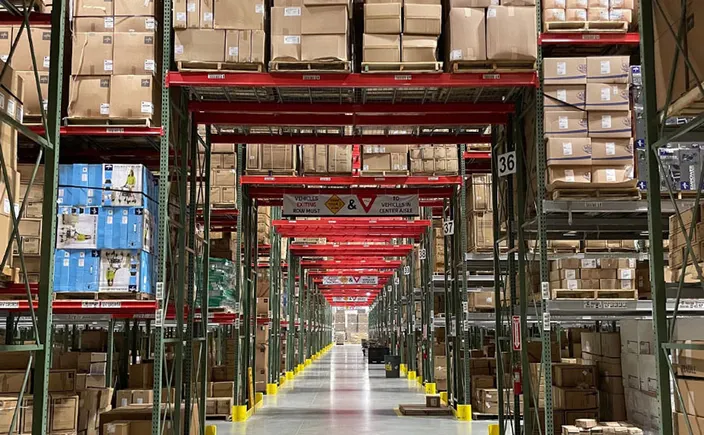
The goal for these major companies and many other retailers is to free up space in stores and warehouses, clear out seasonal or out-of-season merchandise, and restock for the holiday season with items consumers actually want to buy. The biggest question hanging over the industry right now: Will these efforts work? Will inventory levels reach the ideal state of being "just right," or will the inventory "hangover" last through the holiday season and beyond? And if the latter, how bad will it get?
"Retailers have too much inventory, and they're very worried. Because of supply chain challenges, they ordered too much. Now heading into the holiday season, they're facing an inventory glut, and they know the economy is turning," Alexa Driansky, retail director at AlixPartners, said in an interview. "I think the next year is going to be a bloodbath."
"We're still in the thick of it"
Cowen analysts noted in a report in early October that retail inventories have reached "record" and "peak" levels. The increase in the dollar value of inventory is driven by both higher unit volumes and higher procurement costs. The analysts added that given inventory levels, "2023 gross margin expectations are too high, as markdown support rises, warehousing costs rise, high-cost inventory flows through the income statement, and foreign exchange pressure is increasing."
"I think the next year is going to be a bloodbath."

Alexa Driansky
Retail Director, AlixPartners
Baker of D.A. Davidson wrote in September that retailers are "drowning in inventory," with inventory levels up 22% year over year, hitting a 10-year high. More concerning, the gap between inventory growth and sales growth has widened into a chasm in recent quarters. Baker noted in the report that profit margins at that time should have been near a "trough."
Since then, Nike's results delivered another blow to the market. The sporting goods giant said inventories grew 65% in the quarter ended August 31, while gross margin fell 220 basis points due to markdowns, supply chain costs, and unfavorable currency exchange.
Less than a month later, Adidas followed suit, again lowering its full-year sales and profit margin guidance, partly due to "a significant build-up in inventories as a result of declining consumer demand in major Western markets since the beginning of September." The company added that the excess inventory may need to be discounted during the remainder of the year.
Toy maker Hasbro was also hit. The company reported in October that operating profit in its consumer products segment fell 31% due to additional costs and markdowns from inventory buildup.
"Big brands and department stores have all come out and said, 'Hey, we're still in the thick of it,'" Matt Garfield, managing director at FTI Consulting, said in an interview. "We've made the cuts we can, reduced orders, canceled orders, but that sense of pressure is still there."
No choice
Last year, amid strong demand and widespread supply chain disruptions, many companies might have wished they had more inventory; now, with weak demand, high inventory levels are of no benefit. All response options will erode profits in some way, with the most common approach being markdowns.
A KPMG survey of retail executives released in September showed that 56% of respondents expect an inventory "hangover" after the holiday season. Of those, 52% plan to clear excess inventory through clearance promotions, 48% expect to cut purchases and gradually reduce inventory, and 41% plan to discount or return goods to suppliers. Another 24% said they plan to sell inventory to liquidators and discount retailers.
An Accenture survey of retail executives released in October found that nearly all respondents (99%) said they have included increased promotional activity in their holiday plans. Another 35% said their companies are offering deep discounts or taking other measures to clear excess inventory.
"Retailers with excess inventory have no choice but to either discount heavily this year and absorb the profit hit, or pack the inventory away and try to sell it next year," Driansky said.
Garfield has worked with an apparel company that set up multiple backup distribution centers to handle excess inventory. He noted that this strategy only works for core basic items (like colored polo shirts or shorts that can sell every year), and it comes at a cost—the extra warehousing space itself requires capital.
"People always think about the working capital impact, but they overlook the operational shock," Garfield said. "When you're operating at or above capacity, efficiency drops significantly." For example, when a distribution center is packed with inventory, workers may need to move multiple pallets to find the one they need. He also mentioned an apparel company he worked with that had to pick from off-site storage facilities because the picking slots at its main distribution center were full.
Selling inventory to liquidators is also an option, but Garfield said he hasn't seen much of that. "For this level of inventory glut, the margin loss from liquidation is too great," Garfield said. "Liquidation only makes sense when the excess inventory involves only a small portion of the product mix." But in many cases, it's the "entire product mix" that's affected.
"When you're operating at or above capacity, efficiency drops significantly."
Matt Garfield
Managing Director, FTI Consulting
The costs and margin losses from holding or clearing inventory are not the only pain points for retailers and brands. Although supply chain congestion has eased significantly compared to last year, companies still face supply chain cost pressures from higher fuel prices, rising wages, and higher warehousing rates.
Nevertheless, the Cowen team noted that falling freight and input costs are a "silver lining" in the holiday "gloom"—but the downside is that these cost declines are largely because consumer demand has fallen, retailers are selling less, and therefore shipping volumes have also decreased.
All these costs and markdowns explain why Cowen analysts believe margin difficulties will persist into 2023, and that market consensus expectations for an "aggressive" margin recovery in retail may be overly optimistic and need to be revised downward.
Can Q4 clear it all out? Maybe just "cleaner"
So, could the "bold" and "decisive" actions taken this year to correct course before the holiday season actually work? If Nike and Adidas are any indication, the answer is probably no. But overall, the situation may have improved somewhat.
"Do we think they can clear inventory before the holiday season? We think they'll be cleaner than in Q2," Baker said. "So when it's all said and done, in terms of year-over-year inventory growth... inventory will still be high and still heavy, but the growth rate will be lower than Q2."
Inna Kuznetsova, CEO of supply chain planning company ToolsGroup, said in an emailed comment that with holiday shopping starting early in October, "due to planning errors, we're already seeing a lot of excess inventory being heavily discounted."
Kuznetsova noted that electronics (especially televisions) are the hardest hit by the industry's inventory glut, along with home goods, home improvement products, and apparel and fashion, while demand for categories like cosmetics is rising.
FTI's Garfield also noted that some categories are hit harder by the inventory glut than others. He mentioned home decor—where consumers spent heavily in advance in 2021—as well as footwear and apparel, which are facing tough times.
"Certain sectors are going to get hit hard, and they won't have a chance to clear all this inventory," Garfield said. "The bigger challenge is how to create freshness and bring in seasonal merchandise while dealing with high inventory."
Although markdowns pressure profit margins, Baker also pointed to an offsetting effect in retailers' favor: discounts could drive revenue growth by attracting consumers to buy more. "We still think sales will be decent because prices will be more attractive, and consumers do seem to still be spending," Baker said. "But discounts are an offset because retailers are making less money per unit."
For brands and manufacturers on the other end of the wave of order cancellations by retailers this year, sales will take a hit. "One message we keep hearing is that retailers aren't placing orders," Baker said. "That's bad news for any retailer's suppliers."
However, even if retailers successfully clear their excess inventory, they face another problem: After several quarters of hunting for and buying discounted goods, will consumers return to paying full price? As HSBC analysts put it in a report on Nike's tough year: "Consumers who are used to paying full price may quickly develop bad habits."