
The Diverging Fates of Santa Rosa's Three Major Shopping Centers: Who Will Prevail in the Retail Winter?
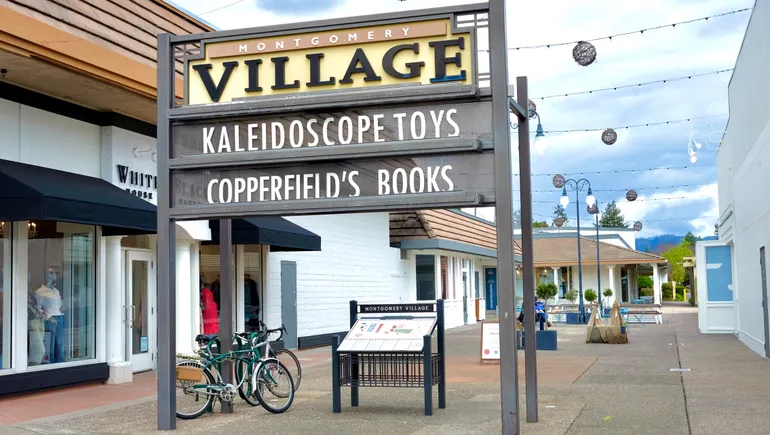
The three major shopping centers in Santa Rosa, California—Santa Rosa Plaza, Coddingtown, and Montgomery Village—face different survival challenges. Despite rapid population growth in the city, shifts in the retail environment, differing owner strategies, and local competition have led to their diverging fates. Market research suggests that the oldest, Montgomery Village, may emerge as the ultimate winner.
Santa Rosa, California — A city of about 180,000 people, surrounded by Sonoma County's vineyards, farmland, and some of California's oldest redwood groves, it is a key town in the North Bay region. Five years ago, Santa Rosa was severely hit by the Tubbs Fire, but thanks to rapid rebuilding and its new positioning as a commuter hub for San Francisco (about 60 miles south across the Golden Gate Bridge), the city continues to grow. However, despite economic prosperity, the fate of its three major shopping centers, like many similar facilities across the U.S., is fraught with uncertainty.
The Codding Family Connection
The fates of these three centers are intertwined — Santa Rosa Plaza downtown (about 40 years old), Coddingtown to the northwest (61 years old), and Montgomery Village in the northeast historic district (73 years old). Their common link is the 'Codding' family.
Hugh Codding died in 2010 at age 92. He left a deep mark on Santa Rosa, building numerous homes and serving as a city councilman. In the early 20th century, he acquired orchards and other plots, eyeing residential and commercial development. According to his granddaughter Lois Codding, his first shopping center project, 'Town & Country,' sold out before completion, yielding far more profit than residential sales at the time, prompting him to pivot to shopping center development.

In 1950, Codding opened Montgomery Village, one of the first large shopping centers in the U.S. Encouraged by its success, in 1962 he opened another open-air shopping center on the other side of the city — Coddingtown. As enclosed malls gained consumer favor, Coddingtown added redwood ceilings in 1979. In 2005, mall REIT Simon Property Group acquired a 50% stake, but the Codding family bought it back in 2017. Today, Coddingtown is operated by Lois Codding and her sister Lisa, along with their real estate firm Codding Enterprises. The mall's anchors include two original department stores — Macy's (formerly Emporium Capwell) and J.C. Penney — along with Target and Nordstrom Rack, and it has always had a grocery store (now Whole Foods). Tenants range from national chains to local businesses, including retail, dining, and services.

Lois Codding said: 'Initially, Simon had grand plans for Coddingtown, but they didn't prove profitable. Traditionally, profits came from inside enclosed spaces, but that model has reversed. Simon faces a tough road ahead, and I'm curious how they will transform the mall. For a small private company like Codding Enterprises, making changes is easier in some ways, but also harder, because we don't have Simon's financial leverage. We're willing to work with local merchants and stay flexible, and we live in the area, which gives us an advantage over large REITs.'
Another Codding Connection
The question of how Simon will transform its enclosed center also applies to the city's third-largest mall — Santa Rosa Plaza. The REIT has owned this property since 1998. This downtown plaza never belonged to the Codding family, but there is still a certain Codding connection. The center opened in 1983, after Hugh Codding, as a city councilman and real estate mogul, had blocked its construction for years. He protested the urban renewal plan (which included demolishing historic buildings to build the mall) and later hindered the competitor's project through legal challenges. After about a decade of disputes, Santa Rosa Plaza finally opened its doors.

This enclosed building has five levels of multi-story parking and 693,000 square feet of leasable space, with anchors Macy's and fast-fashion retailer Forever 21 (the latter partially owned by Simon). Today, many residents believe this massive structure and its parking facilities hinder the city's current revitalization efforts.
Peter Gerney, founder and principal of market research firm Gerney Research Group, said in a phone call: 'It's a fortress, and it really disrupts the flow and vitality of the market. In a place like Santa Rosa, where the climate is pleasant and people enjoy the outdoors and convenient parking, Santa Rosa Plaza is the toughest of the three. This isn't a criticism of Simon — Montgomery Village and Coddingtown are both suburban-style with surface parking. Montgomery is open-air, which helps; Codding is locally owned, and locals know that.'
Old Things Made New
Among Santa Rosa's major shopping centers, the one best positioned in today's tricky retail environment is not the downtown plaza — it's the largest and run by a well-funded REIT; nor is it Coddingtown, which is well-located, family-operated, with easy parking and a busy Whole Foods. According to Gerney, it's the oldest, Montgomery Village. He said: 'In the long run, Montgomery Village will stand out as the market's primary open-air fashion center. It's a nice small lifestyle center that will only get better.'

This is partly thanks to Boston-based WS Development, which Gerney says will bring necessary upgrades and the leasing power that comes with national management. WS Development's Chief Financial Officer Eric Smuckler said in a phone call: 'We looked at Montgomery Village for years before the Codding family sold it to us. Our general thesis — you can see it in our portfolio — is that if you can buy or build the right place in the right location, and it has no roof, you can create a truly pleasant environment for customers.'
Smuckler said the return to open-air concepts has multiple reasons, including more convenient parking (which matters), but more appealing is the scale of the space, allowing for pleasant strolls and lingering. Dining, services like hair salons, and special events and programming attract different customer groups at different times.

Smuckler said: 'The open-air format allows us to accommodate grocery, gyms, nail salons, spas, and retail. It lets us have many restaurants with outdoor seating, especially in California's climate. It feels like an environment you want to stay in and return to, and we think the property can be active 15 to 18 hours a day.' He added that most importantly, Montgomery Village retains the fundamental strengths rooted in Hugh Codding's original vision: 'It's always been on a good road and in a good neighborhood, built as a downtown for Santa Rosa customers in this inner suburb, and that customer base is growing. Because of what was built long ago and its charm, we're able to benefit from it while doing our best to make it a special place for the community.'