
Can Express Survive the New Era of Apparel Retail?
Express's net sales fell 6.4% to $435.3 million in the second quarter of 2023, with a loss of $44.1 million and inventory up 20% year-over-year. The company has responded with measures such as layoffs and a reverse stock split, and appointed Stewart Glendinning as the new CEO. A joint venture with WHP Global brought in funding, but high royalty fees raised concerns. Analysts note a decline in brand appeal and bankruptcy risks, yet there are also growth opportunities.
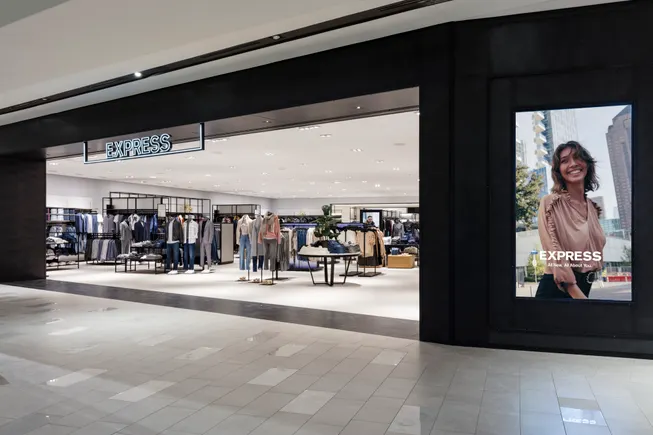
About 40 years ago, when Express first entered the retail scene, it focused on making business casual attire stylish, attractive, mainstream, and easy to purchase in malls—the most important sales channel at the time. The retailer, founded in 1980, was a spinoff of The Limited, which once had physical stores but has now closed all its offline locations and sells only online. Express says it has "always been part of some of the most important and culture-defining fashion trends."
However, at the peak of the pandemic, consumer demand and interest in many of the products Express offered noticeably weakened. Business casual fell out of favor, and more comfortable athleisure became mainstream.
The clothing retailer reported earlier this month that second-quarter net sales fell 6.4% year over year to $435.3 million. Express posted a second-quarter loss of $44.1 million, compared with net income of $7 million in the same period last year. Inventory rose 20% year over year, comparable store sales fell 21%, e-commerce sales fell 1%, and comparable outlet store sales fell 17%. In response, Express said it is accelerating cost-cutting initiatives to regain sales and profit momentum. The company also said it has hired advisors to review its business model, targeting $200 million in annualized savings by 2025.
Additionally, in late August, the company implemented a reverse stock split and plans to cut 150 jobs by the end of the third quarter. The reverse stock split brought the company back into compliance with New York Stock Exchange listing standards; earlier this year, it had faced delisting risk due to its stock price remaining below $1 for an extended period.
Like many other retailers, the company said it faces macroeconomic challenges, with consumers reluctant to spend on non-essential items. But given such a quarterly loss and a 23% gross margin, "the so-called growth momentum of this retail brand has lost steam," Shawn Grain Carter, retail consultant and professor at the Fashion Institute of Technology, State University of New York, told Retail Dive. "Therefore, Express is truly in a critical state, teetering, and possibly heading for bankruptcy."
One day after the earnings release, Express chose a new CEO to lead the company. Tim Baxter, who had led the company since 2019, resigned and left the board, the company said in a statement. Succeeding Baxter is Stewart Glendinning, formerly president of Tyson Foods, who became CEO and joined the board on September 15.
Although Express has had some bright spots, analysts and industry experts say the brand has become stale in recent years, failing to cultivate and maintain the brand awareness it once had.
The brand has become "extremely bland"
According to Eric Beder, CEO and senior research analyst at Small Cap Consumer Research, the retailer's current challenges began about three years ago. At the peak of the pandemic, almost overnight, as many people shifted to working from home, consumer interest and demand for business casual and more formal clothing plummeted. Comfort became key, and people abandoned business casual in favor of athleisure. At the same time, Express faced the challenge of revitalizing a brand that "has become extremely bland." Beder said, "If you're that bland, you lose the ability to command better pricing, right?"
"So currently, Express's management is trying to find the right mix and balance between fashion and basics to generate good returns without having to worry about inventory... to drive higher levels of return," Beder said.
"Even good management teams still make fashion mistakes."
— Eric Beder, CEO and senior research analyst at Small Cap Consumer Research
Beder said the risk and reward in fashion retail is that if merchandise is planned well, customers buy at full price, "and you make great margins. If it's planned poorly, you end up with a glut of merchandise and may have to discount heavily." And finding that balance, Beder said, is harder than it sounds. "Even good management teams still make fashion mistakes. That's the nature of the industry."
Without brand awareness, "you can't win"
Beder, who has followed Express on and off for over a decade, said the company occupies an interesting position in retail because its men's and women's businesses are almost evenly split. Most other specialty apparel retailers don't do that.
As of early September, Express said it operated 530 retail and factory outlet stores, 60 Bonobos stores, and 11 UpWest stores. These brands also have online stores. In 2020, Baxter said "the vast majority of new customers come through our stores."
However, Carter said that despite the relatively large store footprint, it's clear that many potential customers, especially younger demographics, have little awareness or familiarity with the Express brand.
"Brand awareness is crucial," Carter said. In fashion, "you have to have the right product, the right price, the right channel, and the right positioning, and you have to keep them working together. So if your customers don't even care about your brand, that's a problem."
Beder agreed. "In the simplest terms, you're competing with Walmart, Target, and everyone selling tank tops, underwear, and basic jeans," Beder said. "You can't win with that."
But Beder said Express has had some bright spots recently. For example, last year the brand's men's swimwear line performed well. This year, the company expanded it to four collections, and the category has been "a complete win" for the company, Beder said.
Meanwhile, Beder acknowledged that times have changed from the retailer's heyday years ago, when Express was the go-to place for fashion-forward clothing a notch above purely casual wear.
The days of going to high-end formal wear stores—especially for men—to buy tailored suits, shirts, and ties may be gone, unless you're in a few conservative professions like finance, law, or politics. But even in those professions, dress expectations are changing. For example, Axios recently reported that Senate Majority Leader Chuck Schumer has relaxed dress requirements for members of the legislature.
Although employers and society are gradually moving away from formal attire, Beder remains optimistic about Express's future. Beder said the retailer's merchandise "has always had great versatility and value," with many of its products not limited to workwear.
Still, Beder said Express "is doing the right things" to improve the business. As the company works to find the right mix, it takes time, and "it's taking much longer than investors would like."
Transformation and new partnerships
Despite financial setbacks, Express has been seeking to return to profitability and expand its brand. Express completed a strategic partnership with WHP Global in January. The two formed an intellectual property joint venture. WHP invested $235 million for a 60% stake, with Express holding 40%.
The strategic partnership was valued at about $400 million in April. Beder said the deal may have indeed helped Express stay financially afloat without taking on more debt. But in the WHP deal, Beder also noted that Express will actually have to pay WHP $60 million in the form of minimum guaranteed royalty fees to use its own brand name. That amount will increase by $1 million annually over the next five years and rise to $65 million after the sixth contract year.
Under the terms of the deal, Express will pay royalties of 3.25% of net retail sales of licensed merchandise in years one through five, and 3.5% thereafter. Additionally, Express will pay royalties of 8% of net wholesale sales of certain licensed merchandise.
Carter called the royalty rate "excessive." If Express has to pay WHP royalties of up to 8%, "that will also erode its cash flow. If you have to pay royalty fees as part of your net income, that won't help."
"If you have to pay royalty fees as part of your net income, that won't help."
— Shawn Grain Carter, retail consultant and professor
When asked about the financial sustainability of the royalty agreement, an Express spokesperson pointed to the company's second-quarter results. In those, Baxter said the licensing agreement would begin generating "minimum guaranteed royalty fees" starting in 2024 and would be accretive. Additionally, Baxter said the partnership with WHP gives the company the ability to make acquisitions.
On the other hand, Beder told Retail Dive that the alliance with WHP gives Express "the ability to transform the business at a very reasonable price." The alliance could also allow WHP to expand the Express brand globally. Beder said he wouldn't be surprised to see Express and WHP announce plans in the future to open stores in new markets, including the Middle East, Southeast Asia, or Europe.
But Neil Saunders, managing director at GlobalData, is more skeptical about the long-term benefits of the WHP-Express alliance.
"The new structure with WHP buys Express some time," Saunders said in emailed comments this month. "Integrating Bonobos also gives it a brand that is more likely to succeed. However, neither of these things automatically solves the ongoing problems in the core business."
"In our view, there is almost nothing distinctive about Express's proposition," Saunders said. "The merchandise is dull, the styles are mediocre, and the prices are somewhat too high for the type of product offered. There isn't enough excitement and energy to carry the retailer through a challenging economic period for consumers."
Express continues to evolve and expand, with the retailer and WHP Global announcing plans in April to acquire Bonobos from Walmart for $75 million. Six years earlier, Walmart had acquired the menswear brand for $310 million.
Carter also said Express has room for improvement in its e-commerce business, which is especially important for younger customers who typically default to online shopping rather than physical stores. Anyone younger than older millennials (around early 40s) "didn't grow up with mall shopping like Gen Xers and baby boomers. They grew up shopping on phones and tablets." Therefore, "they have no loyalty to mall shopping," Carter said. "They find pop-up stores fascinating because they didn't grow up in mall culture, and now they seek experiences."
Last fall, Express opened several Express Edit stores. Recently, the number of these smaller-format stores has grown to 11 across seven states. The company first introduced the Express Edit concept in 2021. But as part of its transformation strategy, Express should focus on its core brand, as having multiple brands and store formats "can confuse customers," Carter said.
Many Edit stores are located outside malls. Despite the push into non-mall locations, Express "is still primarily a mall-based concept," Beder said. "Will they move 100 of their 300 full-price mall stores to non-mall locations?" Beder thinks that's unlikely. Instead, "I don't expect Express to add mall stores anytime soon." Rather, "they'll try some non-mall concepts and see if they work. If they do, that could become an interesting growth period for them."
Despite recent poor financial performance, outgoing CEO Baxter expressed confidence in Express's future. "It's been a challenging year for Express, and our results put us on the defensive, but we are at an inflection point, and now we are confidently moving to offense," Baxter said in the second-quarter earnings call transcript. "The Express brand is positioned to generate cash flow to reinvest in the business, while Bonobos and UpWest are positioned to be our growth engines."
"It's been a challenging year for Express, and our results put us on the defensive, but we are at an inflection point, and now we are confidently moving to offense."
— Tim Baxter, former CEO of Express
But if that strategy fails, given the brand's missteps and the current retail and economic environment, "I wouldn't be surprised if it eventually files for Chapter 11 bankruptcy," Carter said. "I think it's sad because they used to be the ideal place for young people to buy fashionable items at reasonable prices."
