
Retail media networks accelerate expansion, concerns emerge: Is the industry heading for a reckoning?
Retail media, as the fastest-growing channel in digital advertising, is expanding from on-site to off-site channels such as connected TV, social media, and open web programmatic. However, off-site expansion faces risks including limited supply, declining profit margins, and transparency challenges. Industry experts warn that without effective management, they may repeat the mistakes of programmatic advertising, or even trigger industry-wide adjustments.
Retail media has surged to become the fastest-growing channel in the digital space, attracting brand advertising budgets that have shifted from performance marketing due to signal loss. In the past, the industry narrative was filled with high-growth excitement, with retailers showcasing the substantial revenues generated from selling ads based on customer data. Now, the real test is just beginning.
This year, the focus of retail media networks is shifting from on-site advertising—campaigns run on retailers' own properties like their websites—to the off-site realm, encompassing connected TV, social media, and programmatic buying on the open web. Retail media network executives view off-site as a key step toward entering the mainstream market, hoping to prove that their first-party data capabilities can transcend retail and reshape the broader digital advertising landscape.
"I think this is truly an expansion of the value proposition that retail media can offer," said Ali Miller, Vice President of Ads Product at Instacart. Instacart partners with platforms such as Google, Roku, and NBCUniversal.
However, the risks retail media networks face in expanding their appeal could be significant. Without proper safeguards, retailers may end up exacerbating transparency issues in programmatic advertising. Worse, in an increasingly competitive environment where standing out is crucial, individual networks could weaken their value proposition to advertisers.
For now, advertisers and publishers seem to remain actively engaged. According to data from research firm Advertiser Perceptions,off-site programmatic retail media ad spending will reach $20 billion this year, a significant jump from $7.5 billion in 2023. Media giants like Disney are partnering with some of the largest retail media networks to improve the precision of connected TV advertising, as buyersprioritize driving business outcomesover conventional video metrics like reach and frequency.
But there is pressure behind the off-site trend, including supply constraints. Mature retail media networks are nearing the ceiling on the number of on-site ad placements, and adding more could harm the user experience. On the other hand, newer networks are less competitive in on-site inventory and would be at a disadvantage without off-site leverage.
"One of the biggest drivers of why off-site expansion is happening so quickly is that on-site inventory is limited," said Nicole Perrin, Senior Vice President of Business Intelligence at Advertiser Perceptions. "Off-site inventory is almost unlimited."
Google's decision to abandon cookie deprecationis unlikely to weaken demand for retail media, as chief marketing officers are focused on improving advertising effectiveness. Off-site thus presents a lucrative opportunity, but it also comes with distinctly different financial, privacy, and ad quality considerations.
"Off-site advertising, at its best, does deliver additional scale and effectiveness," said Nicholas Ward, co-founder and President of ad tech company Koddi. "But at its worst, it can become a repeated sale of trusted customer data, ultimately ending up on Made For Advertising websites."
"Oops, where's my supply?"
As the overall retail media growth rate is expected to slow, off-site activity is increasing. According to WARC data, ad spending in this channel will grow 10.6% in 2025, down about three percentage points from 2024, astrade budgets begin to dry up。
"We are nearing the end of a phase transition in retail media, or commerce media, where the story was about growth," Ward said.
Retail media networks view off-site as a way to attract non-endemic advertisers, such as those in financial services and automotive. With FMCG advertiser budgets already stretched thin, these buyers could provide new growth momentum. Compared to on-site ads shown when consumers are already on a retailer's website ready to purchase, off-site ads tend to be more upper-funnel. But off-site media also means changes in return on ad spend and the level of control retailers have, presenting a steep learning curve for many platforms still learning the rules of marketing.
"The reality is that off-site margins are lower," said independent analyst Andrew Lipsman (Media, Ads + Commerce). "While still healthy, on-site gross margins are typically 80% to 90%, whereas off-site might be only 20% to 40%."
These results remain attractive to retailers with thinner core business margins. However, lower off-site returns, coupled with constrained on-site supply, come at a time when retail media is under greater public scrutiny.
"This growth is largely built on the premise of unlimited supply meeting enormous demand. Now they're discovering, 'Oops, where's my supply?'"

Michael Jaconi
Co-founder and CEO of Button
Companies like Walmart and Amazon have begun making ad sales a significant part of their earnings discussions with Wall Street, and retailers generally view this strategy as a way to boost profits. If future growth trajectories fail to meet the expectations retail media networks previously set, a reckoning could follow.
"When retailers look ahead to the next quarter or year and start talking about the growth of these initiatives in public markets, that growth is largely built on the premise of unlimited supply meeting enormous demand," said Michael Jaconi, co-founder and CEO of retail media solutions provider Button. "Now they're discovering, 'Oops, where's my supply?'"
Venturing into murky waters
The different financial picture is only part of the off-site retail media puzzle. Retailers have historically not been experts in digital media, and many have relied on external vendors to build their on-site advertising capabilities.
"Entering ad sales is not (retailers') core competency, and not all retailers have enough talent to support these opportunities."
Andrew Lipsman
Analyst at Media, Ads + Commerce
Off-site advertising adds further complexity. Retail media data is fed into third-party services, such as demand-side platforms and apps, for distribution across the internet.
"If data is pushed to too many places, it can, in a sense, disintermediate yourself and diminish the value proposition you ultimately own," Ward said.
Programmatic advertising has also come under scrutiny as research revealssignificant waste on Made For Advertising websites: these clickbait content farms use dubious tactics to mask their goal of maximizing ad load. Although progress has been made in combatingMade For Advertising websites, retailers must ensure their off-site expansion does not exacerbate the problem. A lack of caution in open web programmatic execution could also diminish retail media effectiveness—a key driver of advertiser interest.
"Precise targeting data aimed at bot traffic won't produce any results," Lipsman said. "Entering ad sales is not (retailers') core competency, and not all retailers have enough talent to support these opportunities."
Build, rent, or buy
Some retail media networks are better positioned to overcome these obstacles. As retail media investment surges, platforms like Amazon and Walmarthave established dominant positions(the former is so large it could almost be its own category). Those with deep pockets can hire experienced talent, develop proprietary ad tech, and acquire media assets to strengthen their upper-funnel capabilities.
"For retailers outside the top five or top ten, building off-site capabilities requires a lot of technology and expertise," Jaconi said.
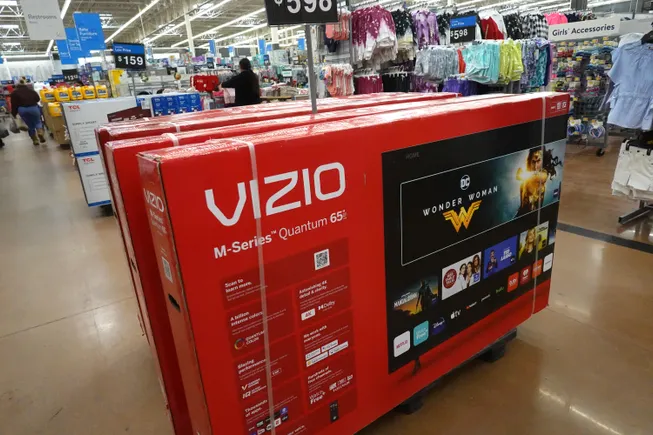
This gap could be particularly pronounced in connected TV, an off-site channel where marketers are investing heavily. Amazon began showing commercials on Prime Video in January, opening the floodgates for the convergence of connected TV and retail media. Walmart acquired smart TV maker Vizio earlier this year for$2.3 billionto bolster its video capabilities. Few other retail media networks can fully capitalize on the connected TV boom.
"If you're not Amazon with its own streaming TV platform, or Walmart with the Vizio platform, you need to achieve these goals through other means," Perrin said.
Another route retail media networks can take is the publisher partnership model, such asBest Buy's partnership with CNetandInstacart's collaboration with The New York Times Cooking section. Digital media publisher partnerships are lower cost, andsome are currently valued at extremely low levels。
"We may see M&A activity because many media companies are valued at low levels," Lipsman said.
Overstepping?
As retail media networks prepare for their next chapter, they will continue to face questions about whether they will repeat the mistakes of walled gardens. Analysts agree that retail media can deliver superior results, but rapidly expanding off-site to maintain short-term profits could cause retailers to overstep.
Meanwhile, advertiser sentiment is mixed: they crave first-party data but resent retailers making retail media purchases part of marketing agreements. According to a survey by the Association of National Advertisers (ANA), an industry group representing marketers, nearly two-thirds of brands view retail media networks as a"must-buy" rather than a "want-to-buy" strategy. Will these sentiments worsen or improve in the off-site era?
"Again, the promise is a connected experience across channels," said Koddi's Ward. "The risk is that what our entire industry is selling may not yet be fully mature."