
The Ebb of the DTC Model: From Frenzied Pursuit to Rational Return
In 2019, DTC brands like Casper, Away, and Glossier were thriving with valuations exceeding $1 billion, but just a few years later, Casper was taken private through acquisition, Allbirds closed stores and shifted to a distribution model, and Outdoor Voices shut down its stores. Simeon Siegel, Managing Director at BMO Capital Markets, noted that brands ultimately found they couldn't truly eliminate the middleman—they just became the middleman themselves. Neil Saunders, Managing Director at GlobalData, believes that DTC and wholesale are not opposites, and a hybrid model is the future.
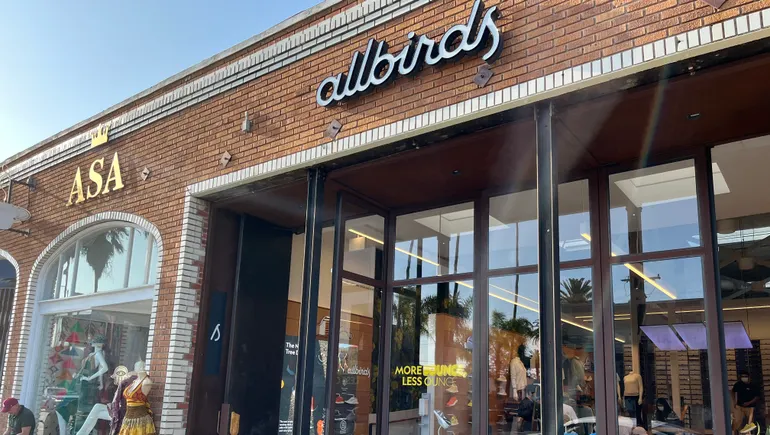
In 2019, DTC brands Casper, Away, and Glossier were riding high with valuations exceeding $1 billion, all reaching that threshold within five years of their founding. At the time, cheap capital, a strong economy, and the hype surrounding the DTC model itself combined to push these brands to the top of the wave.
In the following years, Casper went public, and retail darlings Warby Parker and sustainable footwear brand Allbirds also hit the public markets. Meanwhile, all three companies loudly announced large-scale physical store expansion plans and category expansion strategies, repeatedly emphasizing the strength of the DTC model.
At the time, DTC brands seemed unstoppable. However, the situation quickly took a turn for the worse.
From Peak to Trough: The Collective Retreat of DTC Brands
Casper was acquired by private equity just two years after going public; Allbirds announced it would close stores and shift globally to a "more profitable" distributor model; Outdoor Voices suddenly closed all its stores and was subsequently taken over by the same company that owns Draper James.
"Everyone believed the mantra 'DTC or die' because they wanted to eliminate the middleman and make more money," said Simeon Siegel, Managing Director at BMO Capital Markets. "But they eventually realized: no one can truly eliminate the middleman; they just became the middleman themselves, and that comes with a new set of costs. So for a while, people were overly obsessed with 'where to sell' and neglected 'what to sell,' ultimately losing their way."
A wave of former disruptors, including Peloton, saw their sales plummet, which has become somewhat of the norm. The exercise bike company and its peers have also become increasingly diversified in their interest in sales channels, venturing into Amazon and more traditional wholesale partners. Traditional brands that had followed the trend of going DTC during the surge also began to realize the same challenges, gradually pulling back, and the appeal of pure-play DTC brands faded.
"If Allbirds had still been on a strong growth trajectory, if Peloton had maintained its previous explosive growth, their models might not have shifted much. But the reality is they did change—and both companies are in trouble," said Neil Saunders, Managing Director at GlobalData, noting that these challenges prompted both brands to expand their sales channels. "Now, the genie is out of the bottle and can't be put back."
Saunders also pointed out that even brands like Lululemon, which primarily sell through DTC, have wholesale accounts. "The term 'DTC' is still used as shorthand. I'm just not sure it's as relevant as it used to be."
When asked whether people will still be discussing DTC brands five years from now, Siegel was more blunt: "In a pejorative, backward-looking way? Absolutely."
What Went Wrong
As the DTC model matured, many of the factors that had fueled its growth began to fade. The overall retail market slowed, social media customer acquisition costs soared, venture capital dried up, online order fulfillment costs rose, and the brands themselves hit growth ceilings.
"A lot of things changed and shifted in a relatively short period of time, meaning DTC went from being almost the darling or hero of retail to a channel facing many challenges and problems," Saunders said. "And it needed to prove a lot of things, and in some cases, it didn't prove itself."
In Siegel's view, the model was flawed from the start. His firm has published multiple reports on the impact of DTC sales on key metrics like gross margin. The key point is that Siegel found that brands that shifted to direct sales did not see relative improvements in revenue, gross profit, gross margin, operating profit, or operating margin.
"The fact is there was no improvement. It was clearly controversial at the time and sparked a lot of debate," Siegel said. "But now people look at these results and are beginning to acknowledge that wholesale—if done well—is indeed a powerful force."
"There was so much money flowing at the time that it was hard to do badly." — Neil Saunders, Managing Director at GlobalData
Some emerging brands, like Vuori, may have avoided some of the industry's growing pains by embracing wholesale from the start. Founder Joe Kudla has previously stated that the company saw the value of key wholesale partners from the beginning of its operations and views these relationships as part of the reason it has been able to achieve profitability.
"The partners we initially chose in the U.S., and those we work with globally today, were carefully selected, and our distribution is deliberately limited to the best customers," Andy Lawrence, Vice President of International at Vuori, said in an email. "While I wouldn't say wholesale insulates any brand from all DTC challenges, at Vuori, it has certainly added a key element to our success. Done right, wholesale allows brands like ours to build authentic connections with local consumers."
Still, for a long time, many DTC brands didn't invest in wholesale as a channel at all because selling directly to consumers was working. And investors were eager to fund DTC brands, even if they faced profitability challenges, because capital was cheap and consumers had disposable income to spend on new brands and discretionary items.
"There was so much money flowing at the time that it was hard to do badly," Saunders said.
But in a more discerning market, the value proposition of retail startups became far more important than ever—and was often found wanting. Expensive exercise bikes and fancy sheets are harder to sell in a more risk-averse economic environment.
"It's very important not to conflate the problems of DTC—and there are problems—with the problems of the brands," Saunders added. "Allbirds is primarily a brand problem; it doesn't actually have a distribution problem. So Allbirds can get into more stores, do more things—but that still won't solve the company's problems because the issues lie in the product, positioning, and brand, not the distribution method."
As both startups and traditional brands recognized the limitations of DTC, many began to embrace a more balanced model, valuing both DTC and wholesale. The rationale for this approach has been frequently cited in recent years as brands have moved away from digital-only methods; a report earlier this year noted that wholesale remains the most profitable investment channel for brands.
Matt Katz, Managing Partner at SSA & Company, describes the current situation as a "reset," driven by overinvestment in DTC and underinvestment in physical stores. The importance of stores and wholesale is now driving investment back, and retailers are unlikely to bet as heavily on DTC as they did in the past—unless investors start funding it again.
"It sounds silly, but people chase simplicity when things seem intuitive. This isn't the first time, and it certainly won't be the last, that everyone chases a buzzword," Siegel said. "When companies don't need to be profitable, the P&L doesn't get scrutinized. When companies don't need to be profitable, expenses don't get scrutinized either. That makes it much easier to chase hope and belief rather than be accountable for actual results."
The Reality Check of DTC and Wholesale
The tilt toward DTC—and the subsequent correction—has taught important lessons to both brands and wholesalers. Take Nike, for example. The rise of DTC brands prompted the sportswear giant to make massive investments in its own digital capabilities and stores, while also leading Nike to sever ties with a number of wholesale partners it deemed less important to its overall strategy.
At first, this brought extraordinary growth. Then came the contraction, as Nike decided it had overdone it and actually did need those wholesale partners. Add in layoffs, cost-saving plans, a lawsuit over the success of its DTC strategy, and a sudden CEO change, and you have a good summary of the consequences so far.
"DTC serves many of Nike's customers, but not all of them. A lot of discovery and purchasing of Nike products is done by people who might walk into a department store, especially some older demographics," Saunders said. "These people aren't going to Nike.com directly. They want to buy through the channels they shop in. If Nike disappears or pulls out of those channels, it loses those sales—it's that simple. They underestimated that; there was almost a bit of arrogance about the strength of the Nike brand."
There's no doubt that Nike is a powerful brand. A brand with $50 billion in annual sales.
"Consumers have taken control; they buy based on availability, price, and experience." — Matt Katz, Managing Partner at SSA & Company
But while Nike was learning its lessons about DTC, for better or worse, its wholesale partners were learning their own. Foot Locker—one of the retailers Nike distanced itself from and now seeks to work closely with again—has launched its own transformation initiatives to attract brands to its shelves, including remodeling two-thirds of its Foot Locker and Kids Foot Locker stores over the next few years. Macy's, which received similar treatment from Nike, has been renovating its flagship stores in hopes of keeping customers and brand partners coming back.
"I think the wholesale side really needed to step up as well," Saunders said, noting that retailers like Macy's and Foot Locker have realized they are now "serving two masters." "'One of our masters is the consumer, but the other is the brand. Because brands don't have to be in our stores; we have to prove to them that we're a worthy partner.'"
Indeed, while the pendulum has swung back toward wholesale, some brands are still moving away from certain retailers, and this could continue if those partners don't serve them well. Levi's highlighted in its third-quarter earnings that its wholesale business now accounts for less than 20% of its revenue, down from 30% in 2015. At the time, analysts noted that Levi's sales and profit growth indicated its DTC strategy was working, at least for now.
"I think we've moved away from the era where retailers had the advantage. The retail-brand wholesale relationship used to be very retail-heavy, retail-heavy. That was your point of distribution, and retailers chose which brands mattered most, right?" Katz said. He noted that when brands built their own customer reach through DTC, that balance was broken. Now, Katz says, consumers are in charge. "Consumers have taken control; they buy based on availability, price, and experience."
This means brands need to focus on being present wherever customers want to buy, which might sometimes be wholesale, sometimes DTC, and sometimes Amazon.
"It became a battle among players in the ecosystem—who could squeeze out their own collaborators." — Simeon Siegel, Managing Director at BMO Capital Markets
At the height of the DTC frenzy, companies like Nike and Adidas were very focused on the ratio of DTC to wholesale in their revenue. Nike aimed to increase DTC revenue from 40% to 60% by 2025, while Adidas targeted a 50% DTC share over the same period. Even as wholesale makes a comeback, Siegel believes there is no one-size-fits-all answer to what the ratio should be; brands should adjust these percentages based on their own needs.
Having a strong DTC business doesn't necessarily have to come at the expense of wholesale. For Vuori, having wholesale partners helped raise brand awareness in new markets like the UK and Japan.
"From the initial interactions, we saw these new customers also start engaging and shopping with us through our DTC channels," Lawrence said. "An omnichannel approach, including wholesale, is our best answer for expanding profitably and in a way that enhances brand value."
Siegel believes that DTC and wholesale each have their strengths: DTC theoretically offers first-party data, higher margins, stronger control over the brand, and a closer connection with consumers, while wholesale ideally gives a brand a partner with experience in cost-effective distribution of products.
"It became a battle," Siegel said of how brands began handling DTC and wholesale relationships a few years ago. "It became a battle among players in the ecosystem—who could squeeze out their own collaborators, rather than an overall partnership where everyone could win."
Now it might be fair to say that battle is largely over, with the industry broadly accepting a hybrid model and wholesale-brand relationships becoming more collaborative. But what does this mean for future brands?
"You Shouldn't Aspire to Be a DTC Brand"
While most analysts agree that a hybrid model is the future, they also tend to believe that DTC will continue to be important for new entrants in retail. The channel is easy to set up, has lower initial costs, and is well-suited for startups. But as the era of DTC brands fades, retail may also see more brands launching with partnerships from the very beginning.
For example, when Vanessa Hudgens relaunched her beauty brand Know Beauty, she chose to partner with Amazon. Beauty brand Pretty Smart entered the market through an exclusive partnership with Walmart and its own website, even developing its product line with the mass retailer before launch.
"I think you'll see some brands that might build their presence through very small strategic partnerships," Katz said. "If you can prove the brand has staying power and appeal, then you'll see continued investment in the flagship store real estate model."
Katz said this could include pop-up shops, permanent stores, or limited regional collaborations with retailers, but either way, there may be more emphasis on how quickly a brand can expand its points of distribution. Some emerging brands already provide good examples: actress Millie Bobby Brown launched her fashion brand at Nordstrom within months of her online debut.
While lingerie brands Skims and Savage X Fenty took a bit longer to expand, they also sought wholesale partnerships in addition to their DTC channels, including internationally. However, seeking wholesale partnerships is not without challenges, especially for younger brands.
"The problem with wholesale is that you go to a company and say, 'Look, we want you to carry our products,' and the first thing they say is, 'Our shelves are full,'" Saunders said. "So it's hard to break through. And when you do break through, for a young company, there are many issues to work out. You have huge working capital needs because if you're a brand-new brand trying to get into Walmart—even if Walmart agrees to let you into a small portion of their stores—guess what? Your sales will be substantial, but most companies don't have the manufacturing capacity."
The future model might look more like running brands Hoka and On, both of which have recently surged in popularity, benefiting from strong DTC sales as well as a healthy presence in wholesale.
"You'll see companies start in both ways, but I think fortunately... we've moved beyond simply condemning a particular channel," Siegel said. "There's no such thing as a bad channel. There are only bad partnerships and bad execution."
Saunders believes another challenge for new brands is that "there's already so much out there" in the market. Any retail startup now has to navigate a noisy competitive landscape and offer a value proposition compelling enough to attract consumer interest. Defining oneself as a "DTC brand" is no longer as important.
"We went through an era where companies defined themselves, and were defined by the outside world, based on where they sold, not what they sold. That's silly, right?" Siegel said. "Are you an apparel retailer? Are you a mattress retailer? Are you a connected fitness bike brand? Or are you a channel?... The idea of where you sell should always be a very important part of your business decisions. But it shouldn't define who you are. You shouldn't aspire to be a DTC brand. You should aspire to sell something special and figure out the most economical, healthy, brand-appropriate way to reach your consumer. And I think, fortunately, we've gotten closer to that."
